

ORION 2.0 vs TIGER Cone Loader: Which One Is Right for You?
The ORION 2.0 and the TIGER solve the same problem two different ways. Which cone sizes each one fits, what's in the box, and how to pick.


Dive into the BlueBus world! Explore the latest product reviews, peek inside exciting unboxings, discover lifestyle inspiration, and stay on top of new events – all in one place.


Most people don't think about herb grinder quality until something stops working. The teeth become dull. The threads get sticky. The magnetic lid loses its hold. The screen clogs. The whole thing becomes a frustrating piece of equipment in the middle of an otherwise good setup — and the natural response is to throw it out and buy a new cheap one.
That's the cycle premium herb herb grinders exist to break. A well-made herb grinder isn't five times more expensive than a cheap one because of branding. It's more expensive because four specific things are done better — and those four things determine whether your herb grinder lasts six months or ten years.
Here's what to look for.
The body and teeth of a herb grinder live or die on the material they're made from. There are four common options, and they aren't equal.
Aircraft-grade aluminum (6061 or 7075)
The gold standard. Lightweight, corrosion-resistant, holds sharp teeth indefinitely, machinable to tight tolerances. The downside is cost — proper aluminum stock is expensive, and the machining to use it well takes time and skilled tooling.
Zinc alloy (often called "zamak")
Common in cheap grinders. Heavier than aluminum, softer, dents easily, and the threads strip after a few hundred uses. Worse: some lower-quality zinc alloys can leach trace elements over time. If a herb grinder feels suspiciously heavy at the price point, it's probably zinc.
Plastic
Used in entry-level herb grinders and disposables. Flexes under pressure, can't hold sharp teeth, breaks at the threads. Has its place for one-time use; doesn't belong in a daily setup.
Ceramic-coated aluminum
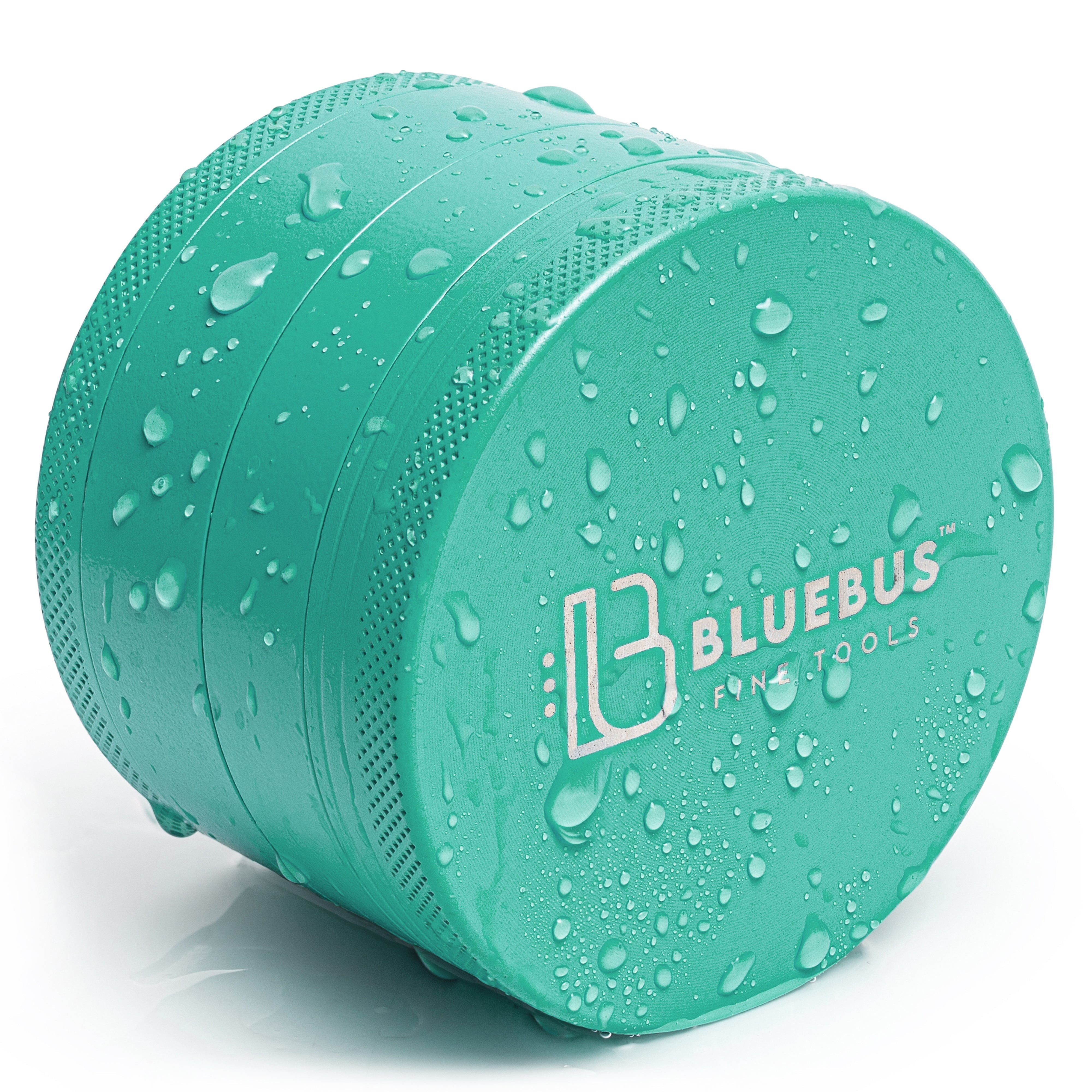
A premium variant that pairs aircraft-grade aluminum (the strength) with a food-safe ceramic interior (the non-stick performance). Material sticks less, cleanup is easier, and there's no metal-on-material contact during the grind.
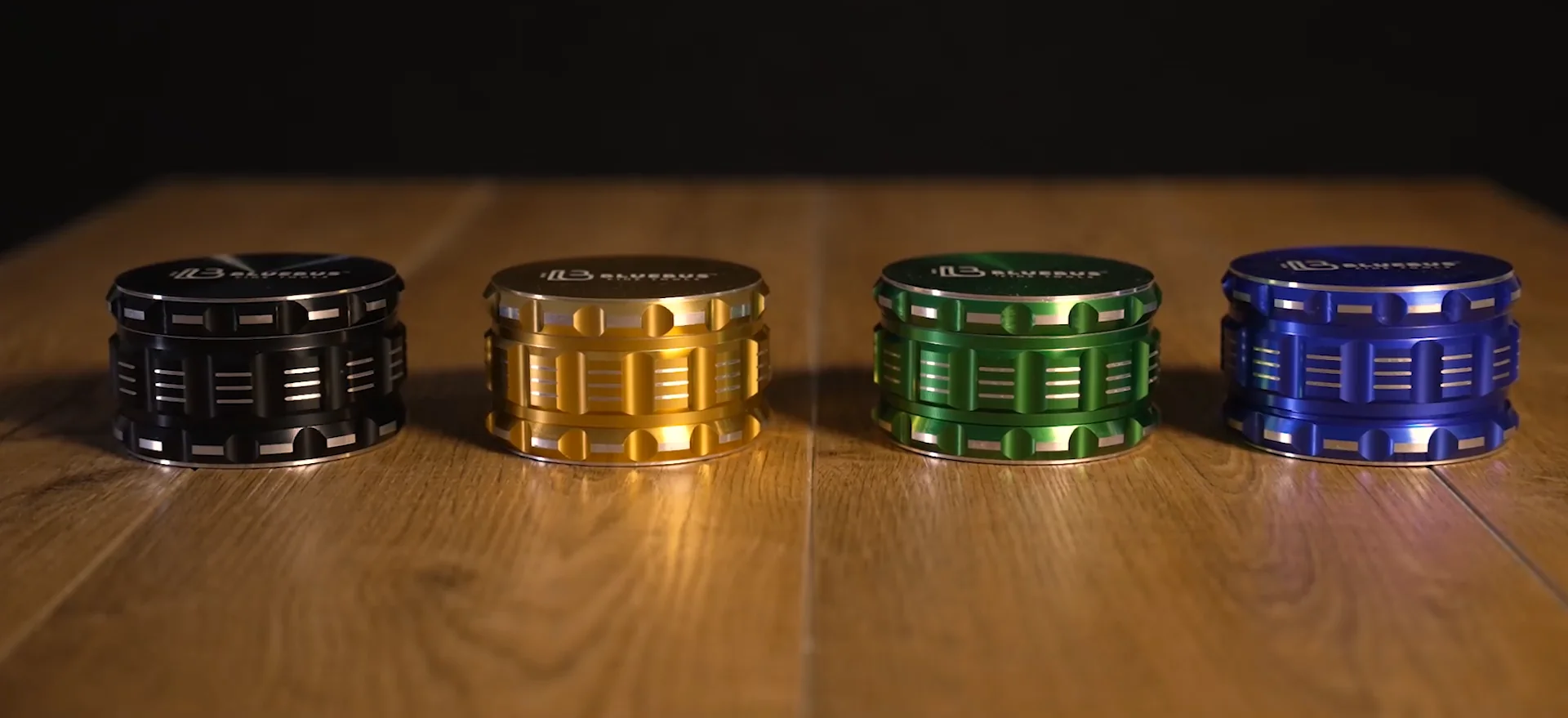
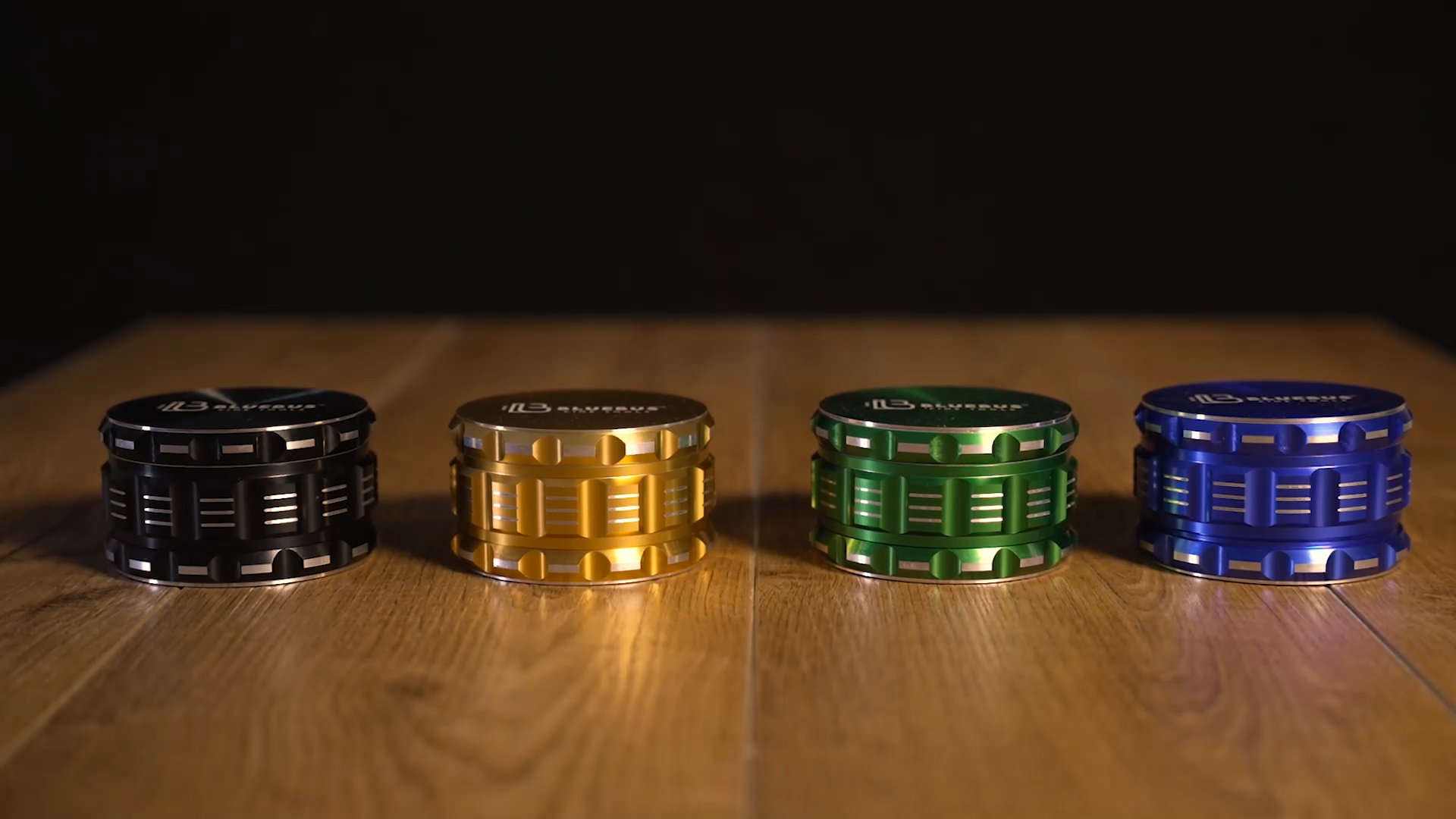
The GA herb grinder is the BlueBus take on premium aluminum — compact, precision-built, the kind of object you don't need to replace. The GAC herb grinder and GC herb grinder take the next step: aircraft-grade aluminum bodies with a food-safe ceramic coating that makes the grind feel smoother and the cleanup faster.
The way a herb grinder is made matters as much as what it's made from.
Cheap herb grinders typically use stamped teeth — flat metal pressed into shape, often unevenly. The result is teeth that look right but bite inconsistently, leaving you with uneven grind (some powder, some chunks). They also dull quickly because the metal wasn't tempered properly during stamping.
Premium herb grinders use CNC machining: a computer-controlled cutting process that produces teeth with exact angles, consistent depth, and tight tolerances. The difference shows up in three places:
You can usually feel CNC precision before you see it. A well-machined herb grinder turns with light, even resistance. A cheap one feels gritty.
Every failure mode in a cheap herb grinder traces back to one of the first two pillars. Here's how they actually show up in your hand.
Teeth that crush instead of cut
Ramp teeth — an angled blade shape common on lower-cost grinders — cut on one side and drag on the other, so the grind comes out uneven unless you're careful. Stubby, blunt teeth are worse: they appear on the cheapest herb grinders, don't really cut at all, and produce inconsistent texture while dulling fast.
Threads that strip
Soft zinc alloy and rough, unevenly cut threading wear against each other every time you twist. It feels gritty from the start, gets worse over a few hundred uses, and eventually the chambers stop holding together at all.
Magnets that give up
Weak magnets lose their hold within a few months. A lid that pops off mid-grind is a recipe for spillage, and it's the failure people notice first.
Screens that clog
Cheap nylon or plastic mesh stretches out of shape, blocks up with fine particles, and needs replacing constantly.
Nothing to get the fine particles out
The cheapest herb grinders skip the scraper entirely, which means tapping the chamber against a table and losing half of what you collected.
Individually these are small annoyances. Together they're why a cheap herb grinder gets thrown out inside a year.
Teeth are the part of the herb grinder that does the actual work, and there's more variation here than most people realize. Two shapes matter on a premium herb grinder.
Diamond teeth
Four-sided pyramid shape with sharp edges that puts even pressure on the material from every direction, which is what produces a clean, consistent grind rather than a mix of powder and chunks. This is the pattern on the GA herb grinder.
Lion teeth
The razor-sharp cutting teeth used on the GAC herb grinder and GC herb grinder — a taller, more aggressive profile that bites into dense material on the first twist instead of skating over it, so you get an even grind with less effort.
Tooth density
The number of teeth per chamber. More teeth = more cutting points per twist = finer, more even grind. Premium herb grinders typically have 40–60 teeth per chamber depending on size.
The pieces around the teeth determine whether a herb grinder ages gracefully or falls apart. The details to look for:
Magnetic lids that actually hold
Strong rare-earth magnets keep the top chamber secure during use and during transport. Every BlueBus herb grinder uses a neodymium magnetic lid for exactly this reason.
Quality threading
Smooth, evenly cut threads between chambers. Twists cleanly, doesn't catch. Lower-end herb grinders often have rough threading that wears down over time and eventually strips.
Stainless steel mesh screen
The fine particles screen at the bottom of the grinding chamber matters more than it seems. Stainless steel mesh is fine enough to catch fine particles, durable enough to last years, and easy to clean.
Included scraper
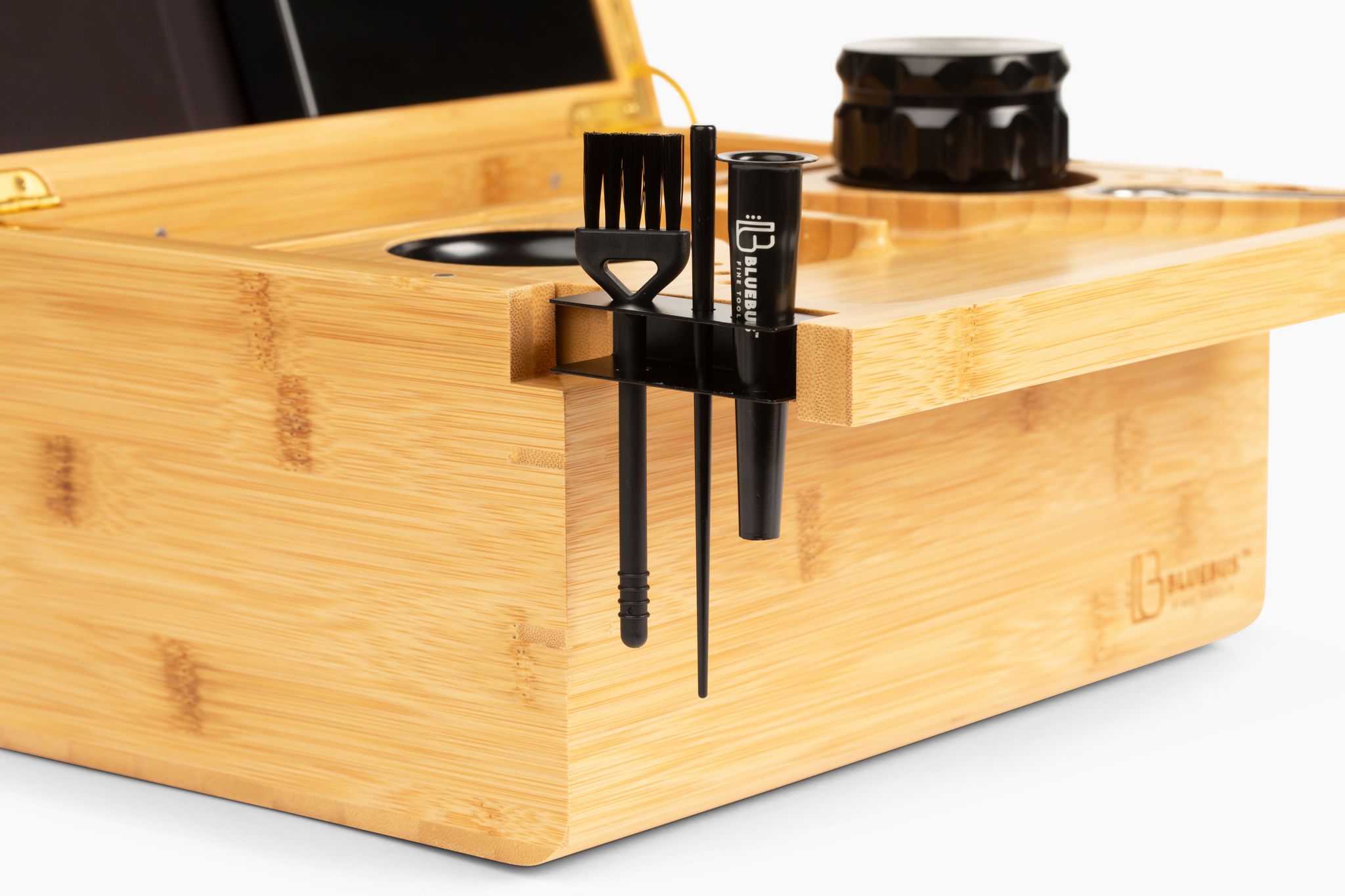
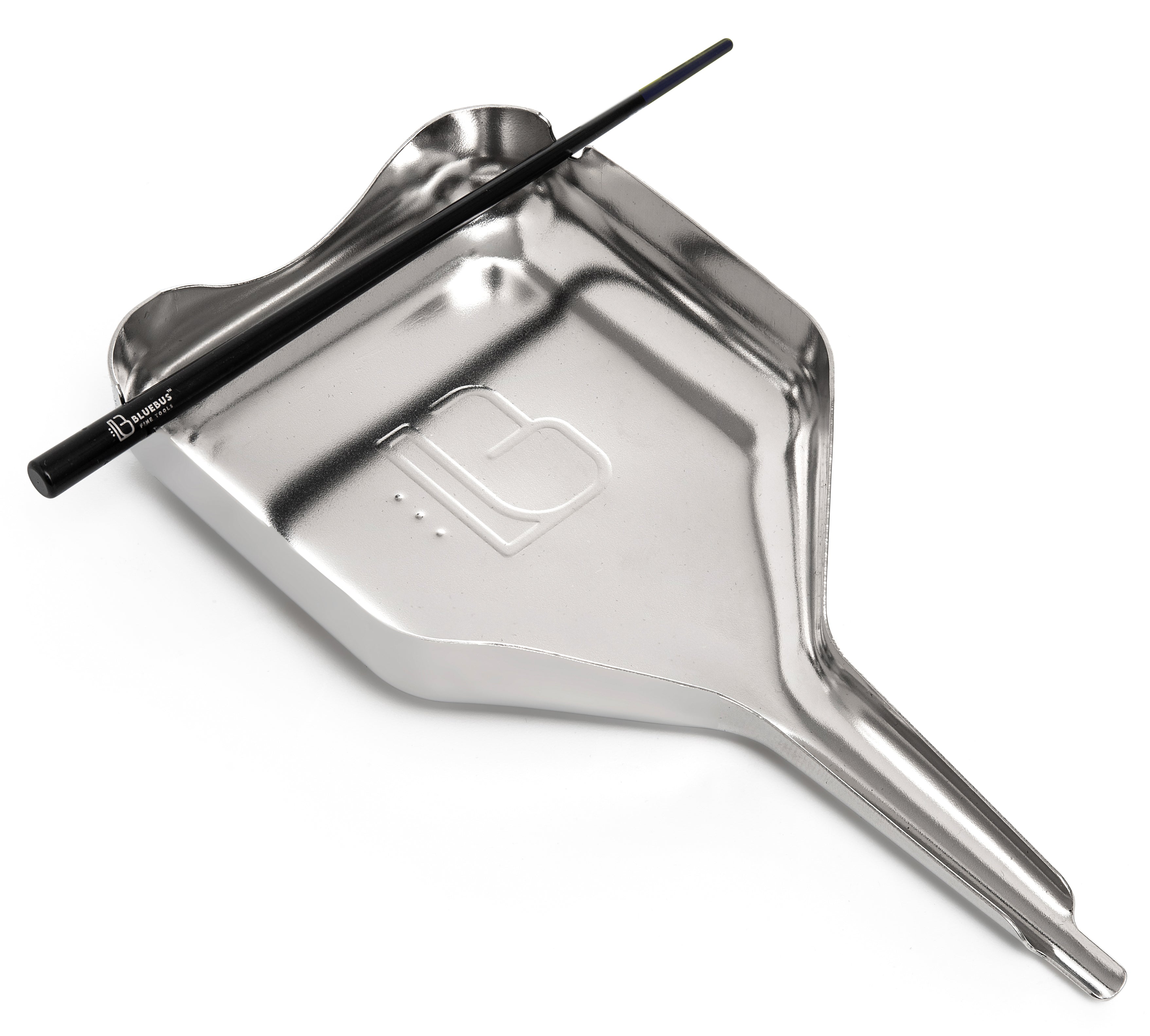
A small tool for collecting fine particles from the bottom chamber. Good herb grinders include one; cheap ones don't. It sounds minor until you own a herb grinder without one and end up tapping it against a table.
Rotation lock instead of screwing
The GC herb grinder uses a twist-lock mechanism that does away with old-fashioned screw threading between the chambers — it locks and releases with a short turn instead of winding through threads that can catch, wear or strip. It's the kind of small detail that separates a herb grinder you enjoy using from one you tolerate.


Three different price-points, three different feels, all built on the same four pillars.
The GA comes in three sizes
The GA is the one line where you choose your scale rather than your finish:
A $15 herb grinder isn't a $50 herb grinder. Once you know what to look for — proper materials, CNC tooling, real diamond teeth, premium construction details — the difference is visible, audible, and tactile. You can feel a good herb grinder in your hand. You can hear the difference between machined and stamped teeth. And you can see the difference in your grind every single time you use it.
Buy the right one once. It pays back in years of better sessions.

