Recycled Polyester: What It Is, How It's Made, and Why It Matters
By BlueBus Fine Tools

If you own a Bulldog Bag or a Blaze, you've been carrying recycled polyester — sometimes labeled "rPET" — for as long as you've owned the product. The outer shells of both are built from it.
It's a material that's quietly become a standard across performance gear, and for good reason. It performs just as well as the virgin polyester it replaces, it uses dramatically fewer resources to produce, and it diverts plastic waste that would otherwise sit in landfills for centuries.
But "made with recycled polyester" on a spec sheet doesn't really explain what's going on — or why we picked it for the two products in our lineup that have to travel hardest.
Here's the full picture.
What recycled polyester actually is
Recycled polyester (rPET) is polyester fabric made from recycled PET plastic — the same plastic used in disposable water bottles, soda bottles, and most clear food packaging. PET stands for polyethylene terephthalate. It's the most widely recycled plastic in the world.
When you wear a jacket or carry a bag made from rPET, you're wearing material that started its life as plastic bottles someone threw into a recycling bin. The bottles get collected, cleaned, broken down, and spun back into fiber — which then gets woven into fabric.
It's the same material as virgin polyester, chemically. The difference is the source: instead of being made from newly pumped petroleum, it's made from plastic that already existed.
How it's made
The process is more straightforward than most people realize. There are five main stages:
-
Collection and sorting. Plastic PET bottles get collected through recycling programs and sorted by color and type. Clear bottles are the most valuable because they can be turned into any color of fabric; colored bottles are typically sorted into separate batches.
-
Cleaning. The bottles get washed thoroughly to remove labels, adhesives, food residue, and contaminants. This stage matters a lot — leftover contaminants would weaken the final fiber.
-
Shredding into flakes. Cleaned bottles get shredded into small plastic flakes, sometimes called "PET flakes." At this stage, the material looks like crushed glass.
-
Melting and extrusion. The flakes get melted down at high temperature and forced through tiny holes — a process called extrusion — that produces long, thin strands of polyester. As the strands cool, they harden into yarn.
-
Weaving into fabric. The yarn gets spun into thread, then woven or knitted into fabric. From there, it's cut, sewn, and finished into whatever the final product is — a jacket, a bag, a backpack panel.
The whole pipeline typically takes a few weeks from collected bottles to finished fabric. Depending on the weight of the garment, anywhere from 5 to 30 used bottles can go into a single piece.
The environmental case
This is where recycled polyester earns its place. Compared to producing virgin polyester from new petroleum, rPET delivers measurable reductions across multiple categories:
Energy use
Producing rPET uses roughly 50–60% less energy than producing virgin polyester. A 2017 study by the Swiss Federal Office for the Environment put the number at about 59% less.
CO₂ emissions
rPET production typically generates around 30% less carbon dioxide than virgin polyester. The exact number varies by facility, but the reduction is consistent across multiple lifecycle studies.
Petroleum dependence
Virgin polyester is essentially a crude-oil derivative — every kilogram of new polyester represents new petroleum extraction. rPET uses material that's already been made, removing that step from the supply chain.
Plastic waste diversion
This is the part most people connect with first. Every kilogram of rPET represents plastic bottles that didn't go to a landfill, didn't end up in the ocean, and didn't take 400+ years to break down. Globally, less than 10% of plastic produced has ever been recycled — every gram of rPET pushes that number, slightly, in the right direction.
Does it actually perform as well?
Yes — and that's the part people find hardest to believe. Because rPET is chemically the same polymer as virgin polyester, it comes off the line with the same tensile strength, the same water resistance, the same weight, and the same lifespan. The recycled origin doesn't show up in the fabric, and it doesn't show up in how the product wears.
The one real difference sits on the manufacturing side. Recycled feedstock varies more from batch to batch than virgin pellets do, so consistent colour and consistent fiber quality take more work to control. That's a problem for the mill to solve, not something the person carrying the bag ever encounters.
Why we use it for the Bulldog Bag and the Blaze
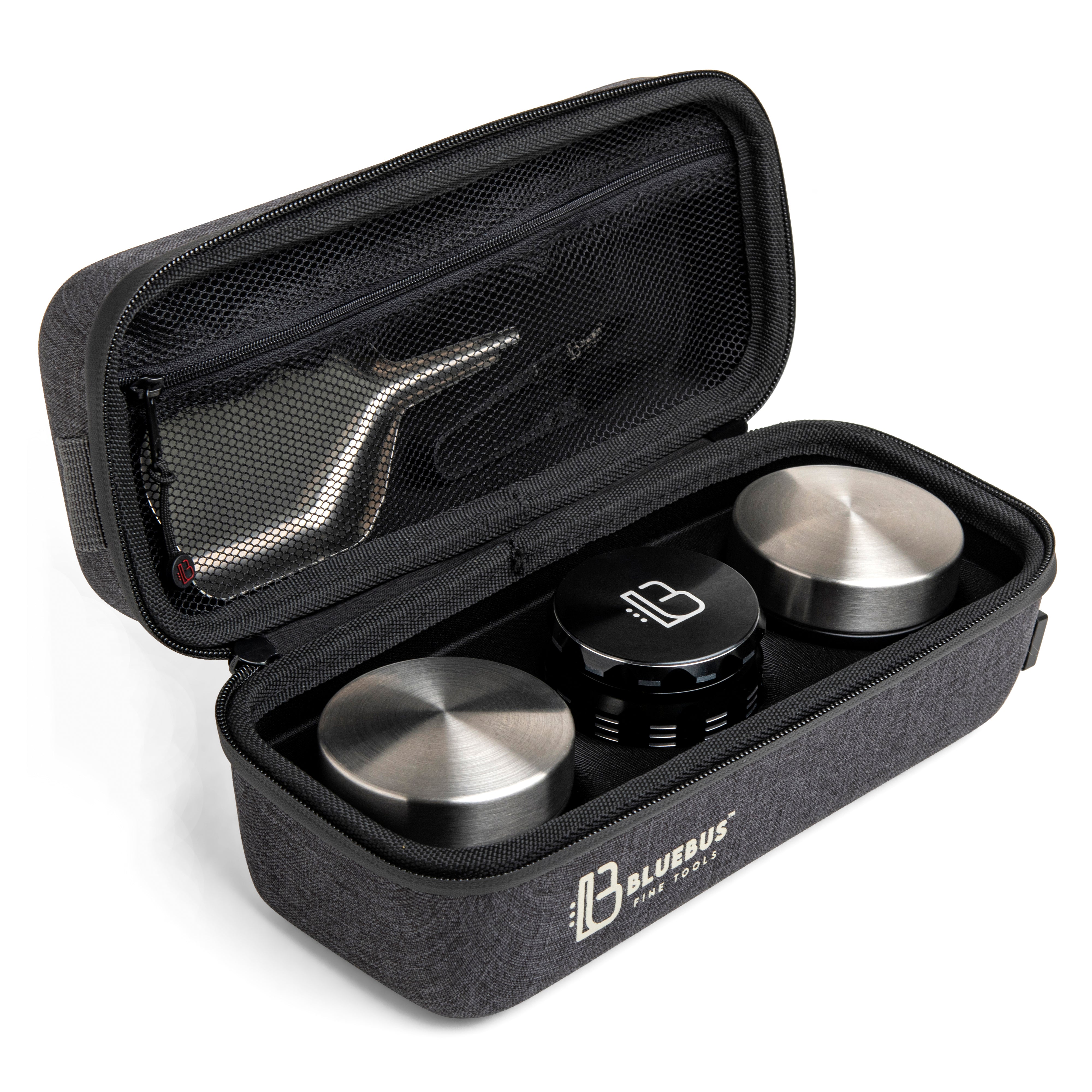
BULLDOG Smell Proof Stash Bag
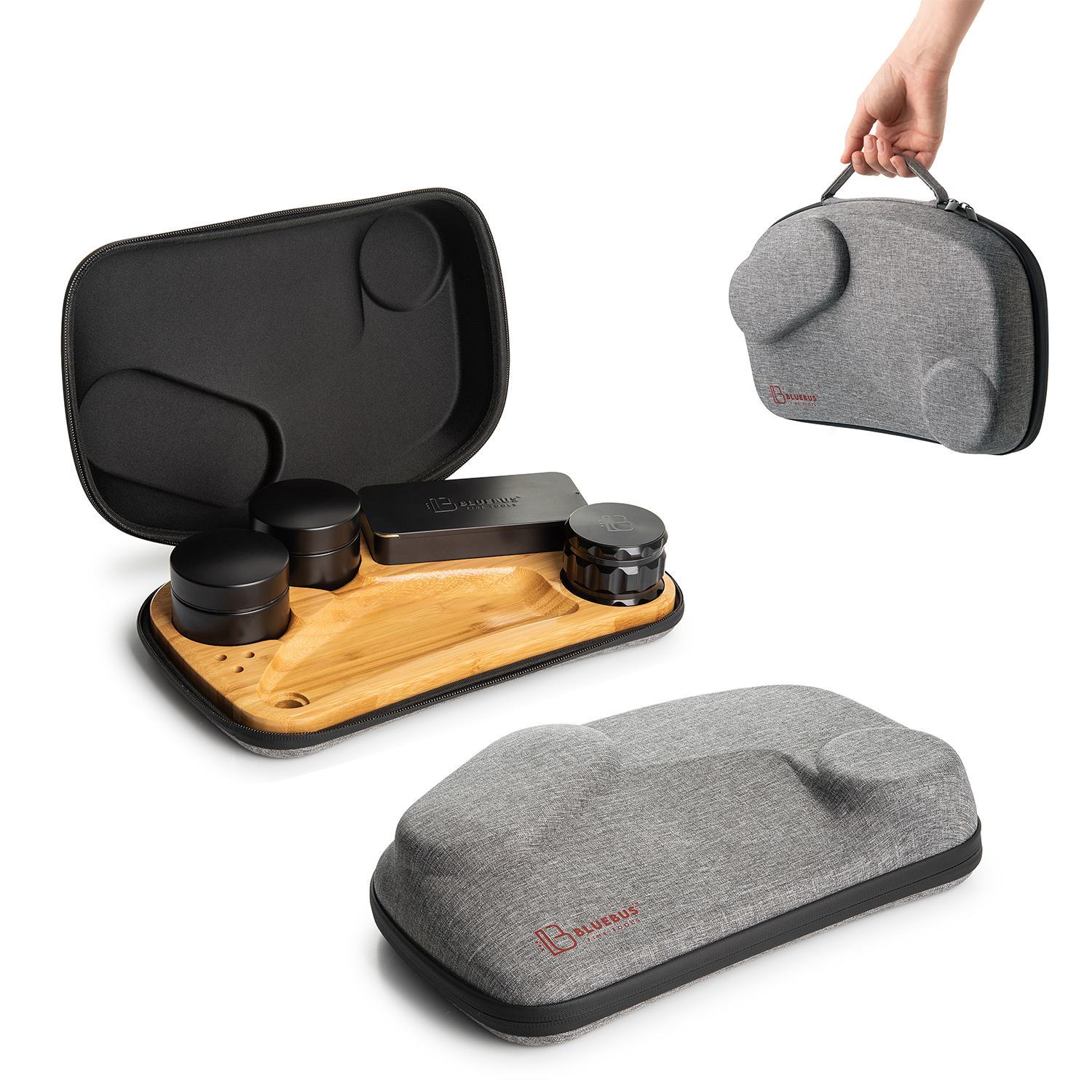
BLAZE Wooden Stash Rolling Tray
A material being functionally identical to virgin polyester is great in the abstract. What actually matters is how those properties translate to the products that have to live the hardest lives — which is exactly the role the Bulldog Bag and the Blaze play in the BlueBus lineup.
Both of these products travel. The Bulldog Bag rides under car seats, gets thrown into duffels, packs flat against everything else in a weekend bag. The Blaze opens at festivals, picnics, backyards, hotel rooms — anywhere a session needs to set up. Their outer shells take more abuse than any other product we make.
That's why recycled polyester is exactly the right material for the job:
-
Durability under stress. Polyester fiber strength is the reason the material has been a backpack and luggage standard for fifty years. It resists tearing, abrasion, and the kind of slow wear that comes from being crammed into bags and pulled out of them dozens of times a month. rPET delivers identical strength to virgin polyester.
-
Water resistance. Spilled drinks, light rain at a festival, a damp picnic blanket — the outer shell sheds moisture instead of soaking it in. What's inside stays dry.
-
Lightweight. Adding pounds to your travel kit because of a heavy outer shell is exactly what nobody wants. Polyester is one of the lightest durable fabrics available, which means the Bulldog Bag stays packable and the Blaze stays carry-able.
-
Quick to dry. If the outer shell does get wet, it dries in minutes rather than hours. That matters more than people realize on a multi-day trip.
-
Colorfast under sun. Outdoor use means UV exposure. Polyester holds its color significantly better than natural fibers like cotton or linen, which means the bag looks new for years instead of fading after a summer.
-
Easy to clean. Spot-clean with a damp cloth and the outer shell wipes down. No special detergent, no dry cleaning. For something that lives on the road, that matters every single time.
A travel product needs an outer shell that takes abuse without complaining, sheds water, dries fast, stays light, and looks good doing it. Polyester checks every box. Recycled polyester checks the same boxes — and removes the environmental cost from the supply chain.
That's why both the Bulldog Bag and the Blaze use rPET shells. The material was always the right answer. The recycled version is just the better way to source it.
How to identify it (and care for it)
Most products that use recycled polyester will say so explicitly on the spec sheet, usually as "100% recycled polyester," "rPET," or "made from X recycled bottles." Some brands also include certifications like GRS (Global Recycled Standard) or RCS (Recycled Claim Standard), which verify the recycled content through third-party auditing.
Care is the same as for any polyester fabric:
- Machine wash cold
- Tumble dry low or air dry
- Skip the fabric softener (it coats the fibers and reduces water resistance)
- Spot clean for small marks
- If you can, use a microfiber-catching wash bag
A well-cared-for piece of rPET fabric will last just as long as virgin polyester — which is to say, years.
The takeaway
Recycled polyester isn't a marketing buzzword. It's a material that uses dramatically fewer resources, diverts meaningful amounts of plastic waste, and performs identically to the conventional version of itself — which is why it's the outer shell of both the Bulldog Bag and the Blaze.
When a product lists rPET on the spec sheet, it's not just a label. It's a choice to take a high-performance material and source it the better way, without asking the customer to compromise on durability, weight, or how long the product lasts.
That's a rare combination. Worth understanding the next time you reach for either bag.