


The Season Your Setup Moves Indoors
Autumn is when your setup stops being portable and starts being furniture. What changes when everything moves to the living room table, and why the Discovery 2.0 is built for it.


Dive into the BlueBus world! Explore the latest product reviews, peek inside exciting unboxings, discover lifestyle inspiration, and stay on top of new events – all in one place.


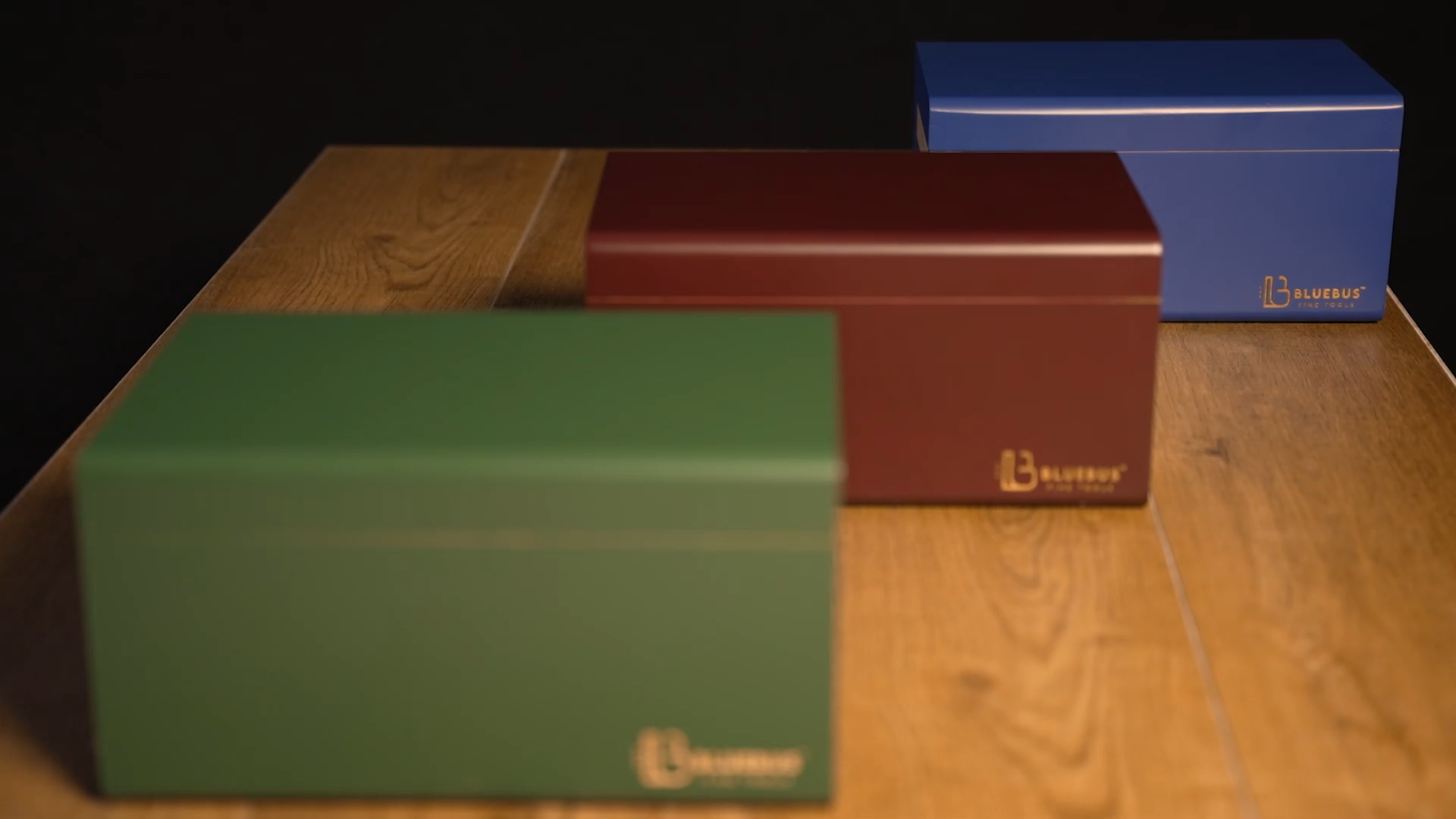
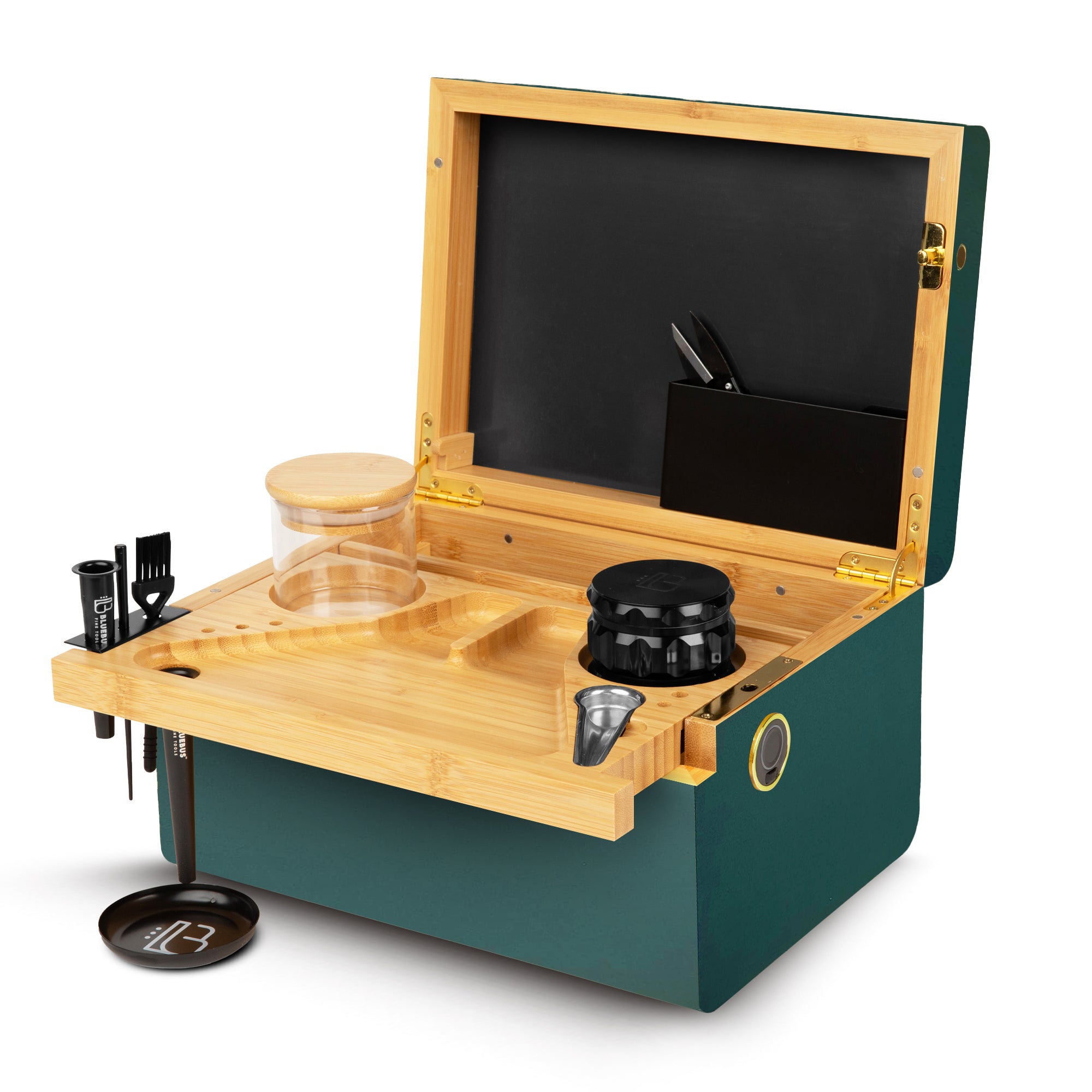
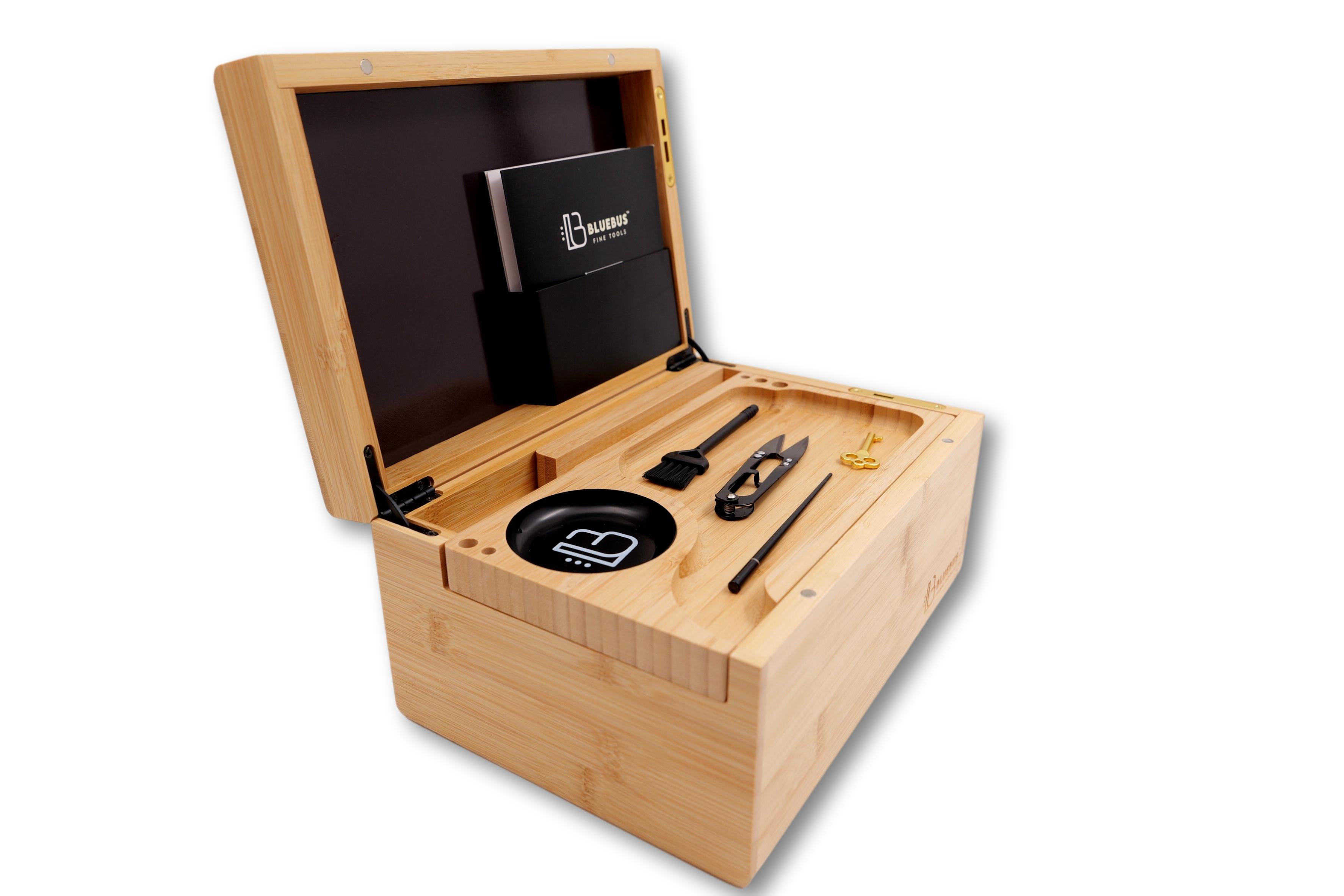
Take the MULTIBOX and measure it. The body is 25 cm long and 15.45 cm wide.
Divide one by the other and you don't get a number close to the Golden Ratio. You get the Golden Ratio.
25 ÷ 15.45 = 1.61812
The Golden Ratio is 1.61803. Four decimal places, on a physical object you can put a tape measure against.
The GOLDEN ROLLER BOX isn't just built to the same proportion — it's built to the same footprint. Same 25 cm by 15.45 cm. That isn't a coincidence and it isn't rounding. Both boxes were designed to that ratio from the start, and everything else about them — tray layout, lid area, compartment sizes — had to fit inside a shape that was decided before anything else was.
Here's what that number is and why we bothered.
The Golden Ratio is a specific proportion, approximately 1.618:1. Its defining property is a kind of self-similarity: if you take a rectangle in that proportion and cut a square off one end, the rectangle left over is in the same proportion as the one you started with. You can keep doing that indefinitely and the shape never changes character.
Mathematicians write it as the Greek letter phi. It turns up in the Fibonacci sequence — 1, 1, 2, 3, 5, 8, 13, 21 — where each number is the sum of the two before it, and the ratio between consecutive numbers gets closer to 1.618 the further along you go.
It's also irrational, which means it never resolves into a clean fraction. No manufactured object can hit it exactly. Getting to four decimal places is as close as a physical thing gets.
This subject attracts more myth than almost any other in design, so it's worth separating what holds up from what doesn't.
The strongest natural examples come from growth patterns rather than any aesthetic intent — most reliably in phyllotaxis, the arrangement of seeds and leaves. The spiral packing of seeds in a sunflower head genuinely follows Fibonacci numbers, because that arrangement fits the most seeds into the space available. Some plant branching follows related patterns for the same reason.
In design and architecture it has been used deliberately for a very long time — in classical proportion systems, in Renaissance composition, in typography and page layout. Whether ancient builders were consciously using phi is genuinely disputed among historians, and anyone who tells you the Parthenon was definitely designed around it is more confident than the evidence supports.
What isn't disputed is that designers have used it deliberately and consistently for centuries, and continue to. Which is the only claim we'd make for it here.
This is the part worth being careful about, because it's where the claims usually get inflated.
The Golden Ratio does not make a box hold more. It does not make it stronger, more durable, or better made. A badly built box in perfect proportion is still a badly built box.
What it does is narrower and more real: it makes the proportions feel decided rather than arbitrary. Most product dimensions are the result of compromise — the box is that wide because the component inside is that wide, and that long because it needed to fit a shipping carton. You can't usually name what's wrong with those objects, but you can feel that nothing about their shape was chosen.
A fixed ratio removes that. The outline is settled first, and every other decision negotiates with it.
There's a practical consequence too, and it's the one we'd defend hardest. Designing to a fixed ratio is a constraint, and constraints force better decisions. When the footprint can't move, you can't solve an interior layout problem by making the box slightly bigger. You have to solve it properly — by rethinking the tray, or the compartment order, or what earns its place inside at all.

25 cm by 15.45 cm. The ratio is the first decision, not the last.
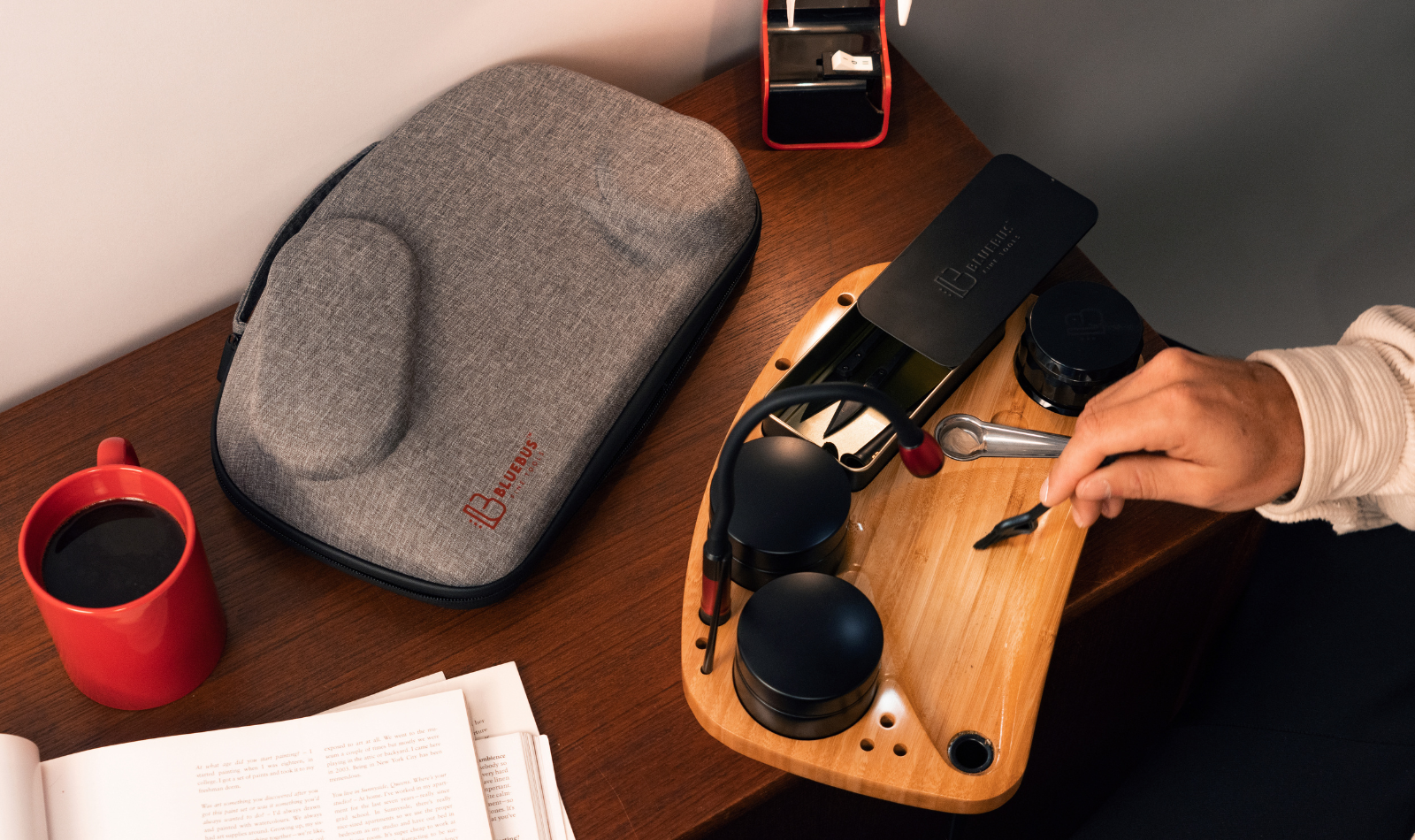
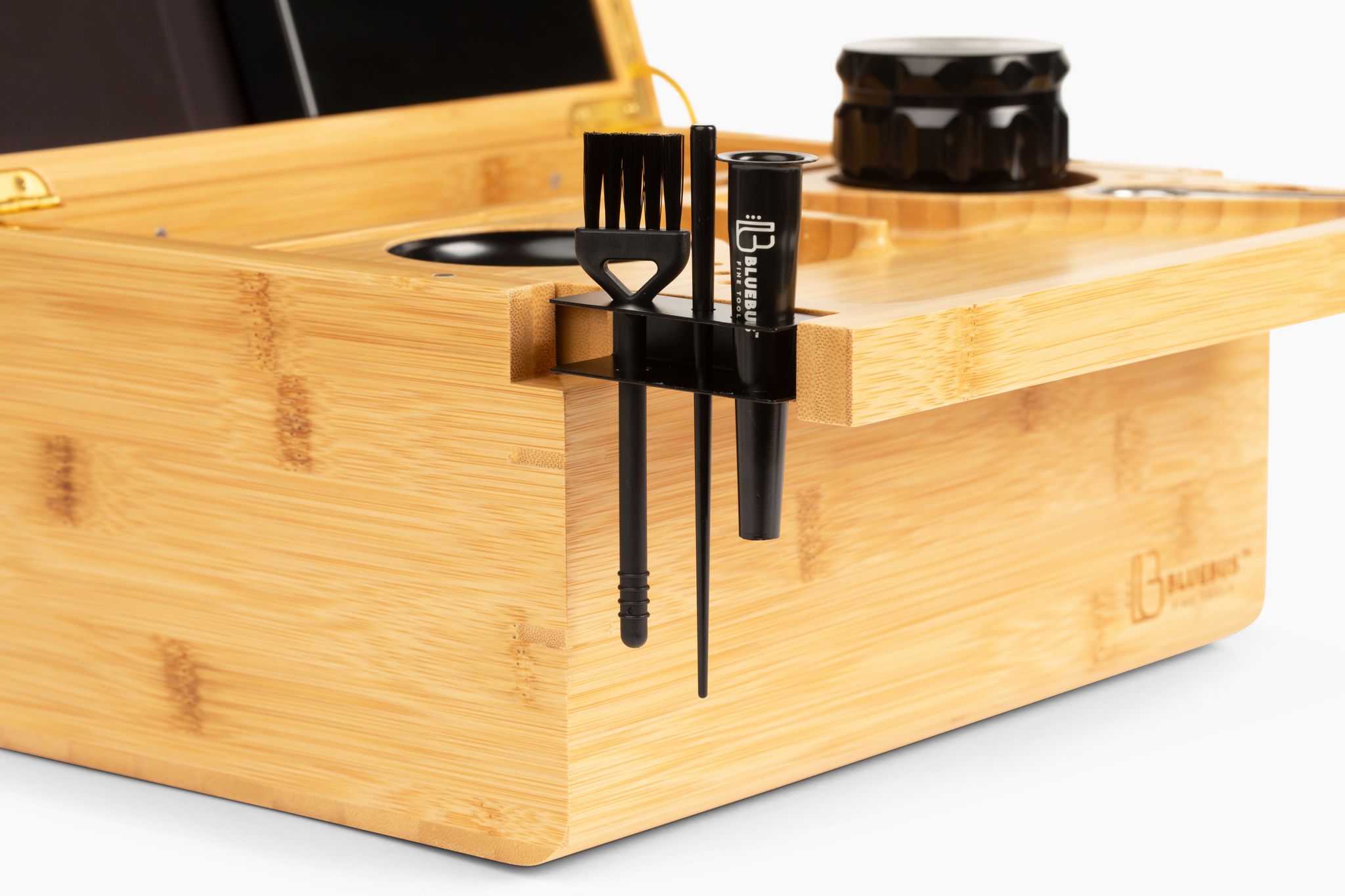
On the GOLDEN ROLLER BOX, the ratio sets the footprint, and the interior bamboo tray is cut to work within it — dedicated slots for wrappers and filter tips, compartments sized to hold the included scissors, metal plate and cleaning brush without anything shifting in transit. The magnetic lid uses the full top face as an organizational surface.
On the MULTIBOX, the identical footprint is put to a different job. The bamboo tray has a dedicated cleaning port, the tin storage box handles small items, and the magnetic lid takes the included stickers so you can lay out the top face however you want.


Two boxes, the same footprint, different jobs.
That's the ratio doing what it's supposed to do — providing a consistent shape language across two products that do very different jobs inside the same outline.
If you want the honest answer: it's not a feature in the way a lock or a magnetic lid is a feature. You won't use it. Nothing about your day is better because the numbers work out.
But objects you keep for years are judged differently from objects you use once. A box on a nightstand gets looked at several thousand times over its life, and proportion is most of what you're responding to when something looks right without being able to say why.
That's what it's for. Not a function — a reason the thing looks settled on a shelf, year after year, long after you've stopped noticing it at all.

