

Ceramic vs Aluminium Herb Grinders: Which Finish Is Right for You?
Ceramic-coated or bare aluminium? A direct comparison of the GC and GAC against the GA - stickiness, cleaning, weight, tooth design and how each one ages.


Dive into the BlueBus world! Explore the latest product reviews, peek inside exciting unboxings, discover lifestyle inspiration, and stay on top of new events – all in one place.


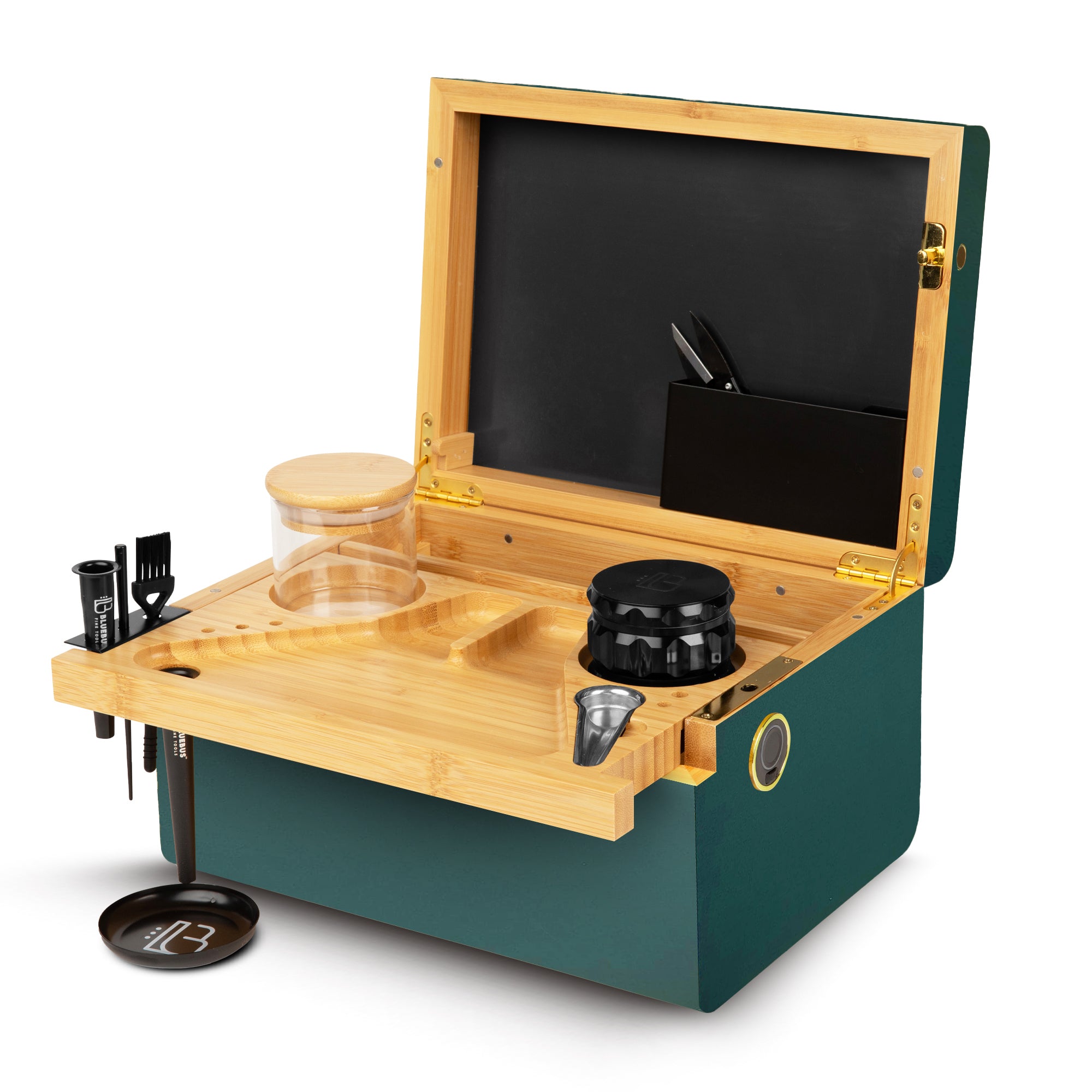
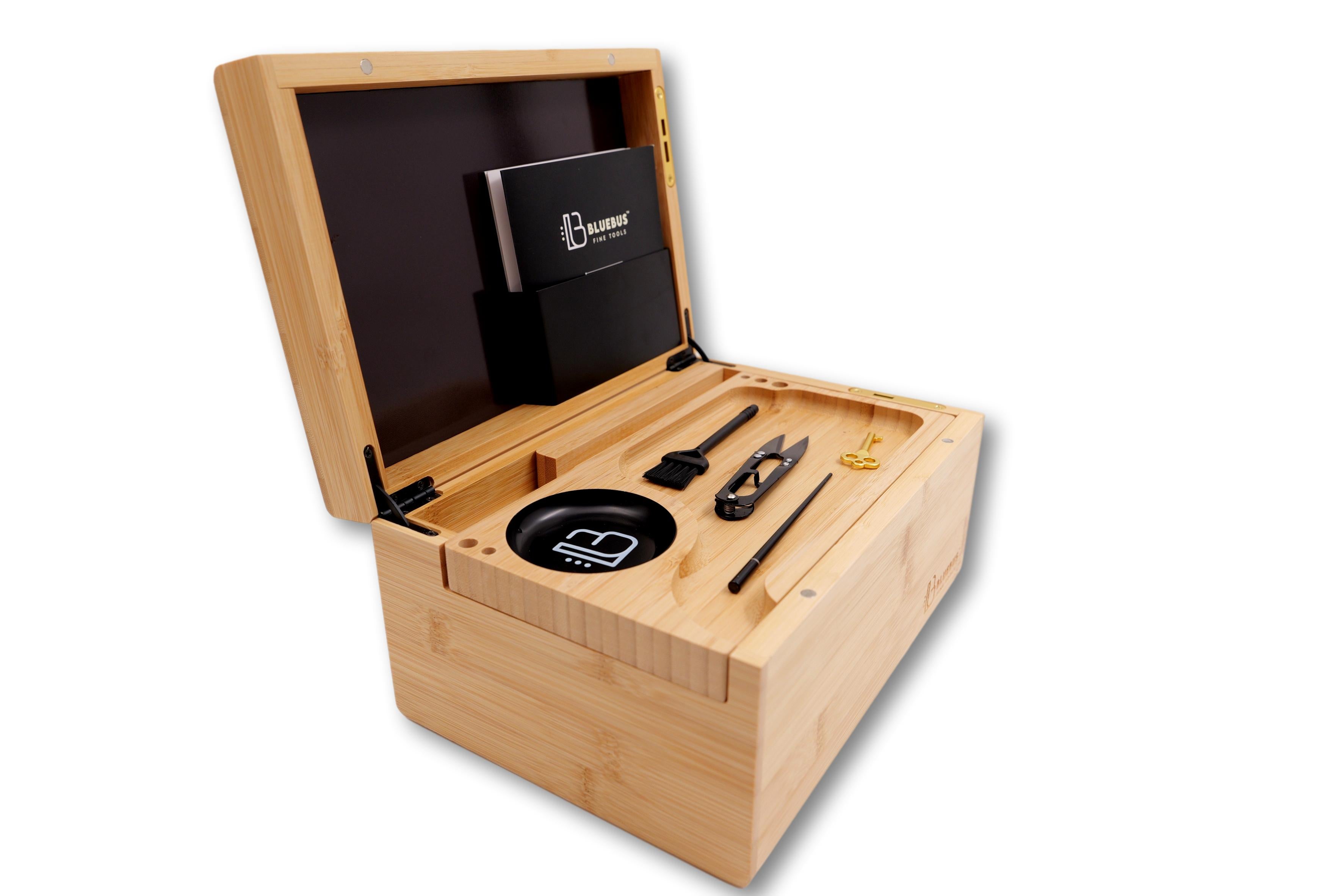
The Discovery is the largest and most complete box we make. It is a bamboo cabinet for an entire routine — a sliding rolling tray, three sealed glass jars, a configurable magnetic lid and a full set of tools that each have a place to sit.
It comes in two versions. They are the same box with two different locks, and we'll get to that at the end, because the lock is the smallest interesting thing about it.
Bamboo, 10.8 inches across, 7.87 deep and 6 tall. That's a real piece of furniture rather than a tin — big enough to be the only thing you own for this, which is the entire design intent.
Bamboo is the material for a reason beyond the environmental one. It's a grass, so it regrows in years rather than decades, but the property that matters here is that it's light for its stiffness. A hardwood box this size would be heavy enough that you'd leave it where it sits. This one you can actually pick up and move to the table.
The hinges are metal and the lid closes onto a magnet rather than a catch, which means it shuts silently. No clasp noise, no latch to line up one-handed. It's a small thing that you notice every single day.
The tray is the part that changes how the box gets used.
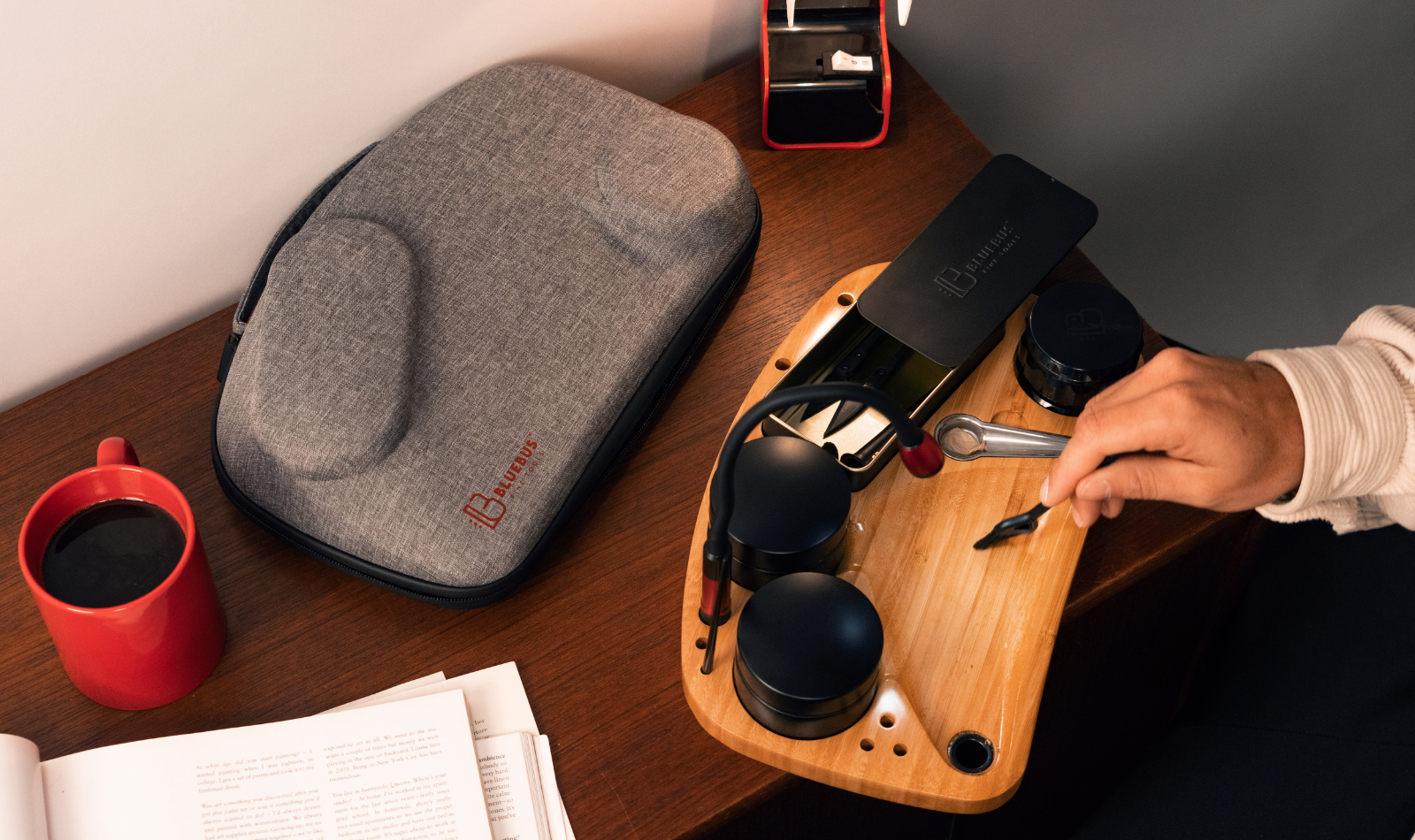
It slides out of the body like a drawer and comes all the way out, so it works as a standalone surface anywhere — the sofa, the kitchen counter, a table in another room entirely. When you're done it slides back and the mess goes with it.
That's different from the common design where the lid flips down to become a tray. A lid-tray is only flat when the hinge is at the right angle, and it's only available while the box is open and sitting next to you. A drawer is flat by default and independent of the box, which means you can have the tray out and the box closed.
Set into the tray is a slot that stands a phone or a small tablet upright. Two silicone strips come in the box so you can tighten the slot to your device's thickness and stop it sliding. It's the feature nobody photographs and everybody ends up using — a screen at a readable angle instead of flat on the table catching the ceiling light.

The tray slides out and works on its own. The slot holds a phone upright.
The inside face of the lid is a magnetic board, and ten metal stickers come in the box.
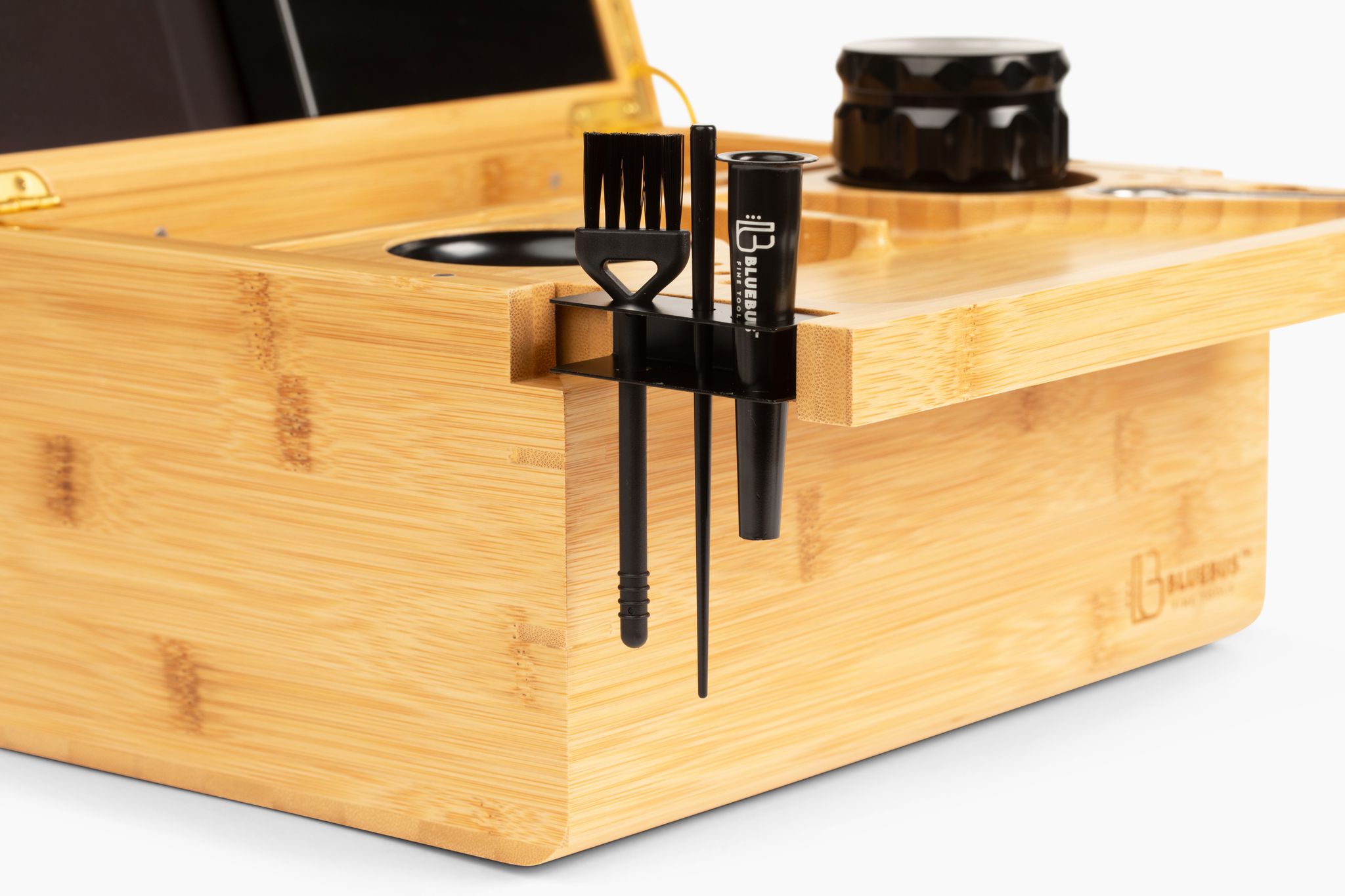
The stickers go on your tools. The tools then go on the lid, wherever you decide they should live. That's the whole idea: rather than a moulded insert that dictates one arrangement forever, you get a blank vertical surface and the freedom to lay it out the way you actually reach for things — and to change it when your routine changes.
Vertical storage is the underrated half of this. A box with everything lying flat in the bottom is a box you dig through. Putting the tools on the lid means the floor of the box stays clear for the things that need the depth.
Both versions ship with the same kit:
The jars are worth dwelling on, because they're the part most kits cheap out on. Glass with a real airtight seal is what keeps things from drying out; a jar with a loose lid is just a container. Three of them means you can keep things separate rather than mixed.
The thing that makes the Discovery worth its size is that it ends the hunt. Most people's kit is distributed — grinder in one drawer, tips in another, tray on a shelf, scissors wherever scissors go. Every session starts with five minutes of assembly and ends with the pieces scattering again.
A box this size holds all of it, which means the routine starts by opening one lid. The tray slides out, the tools are on the inside of the lid where you put them, the jars are in the bottom. When you're done it all goes back and the lid closes, and what's on the table is a bamboo box.
That last part is why it's built to be looked at. A box that lives on a shelf in a room you use gets seen several thousand times over its life — by you, and by everyone who visits. The finish matters for the same reason furniture's finish matters.
Now the choice.
The Discovery 1.0 has a brass key lock. Two keys come in the box, plus a wall hook so the spare has a deliberate home, and replacement keys are available separately. There is nothing to charge and nothing to set up, and it will work exactly the same way in ten years as it does on the first day.
The Discovery 2.0 has a fingerprint sensor. One touch and it's open, nothing to carry, nothing to lose, and access that stays with you rather than with an object a visitor could find. It charges over USB-C and stores multiple prints, so everyone in the household who should have access can have it.
Which one is right comes down to a single question: how often does the lid come up?
A box opened a few times a week wants a key. Nothing to maintain, nothing to think about, and the saving is real. A box opened most days wants the sensor — one touch matters more than it sounds when you're doing it several hundred times a year, and a lock you leave unlocked because locking it is a hassle isn't protecting anything.
If you want that decision in more depth, we wrote a whole post on it: Key Lock or Fingerprint Lock.
| Discovery 1.0 | Discovery 2.0 | |
|---|---|---|
| Lock | Brass key lock | Fingerprint sensor |
| Power | None | USB-C rechargeable |
| Also included | 2 keys + wall hook | USB-C charging |
| Spare parts | Replacement keys | — |
| Body, tray, lid | Identical | |
| The accessory kit | Identical | |
| Price | $190 | $230 |
Four rows differ. Everything else is the same box.


One box, two ways in.
10.8 inches wide, 7.87 deep and 6 tall. It's the largest box we make — sized to hold a complete setup rather than a selection of it.
Yes. It slides out of the body like a drawer and separates completely, so you can use it as a standalone surface anywhere and slide it back when you're finished.
The lock. The 1.0 uses a brass key lock and ships with two keys and a wall hook; the 2.0 uses a rechargeable fingerprint sensor. The bamboo body, sliding tray, magnetic lid and the whole accessory kit are identical.
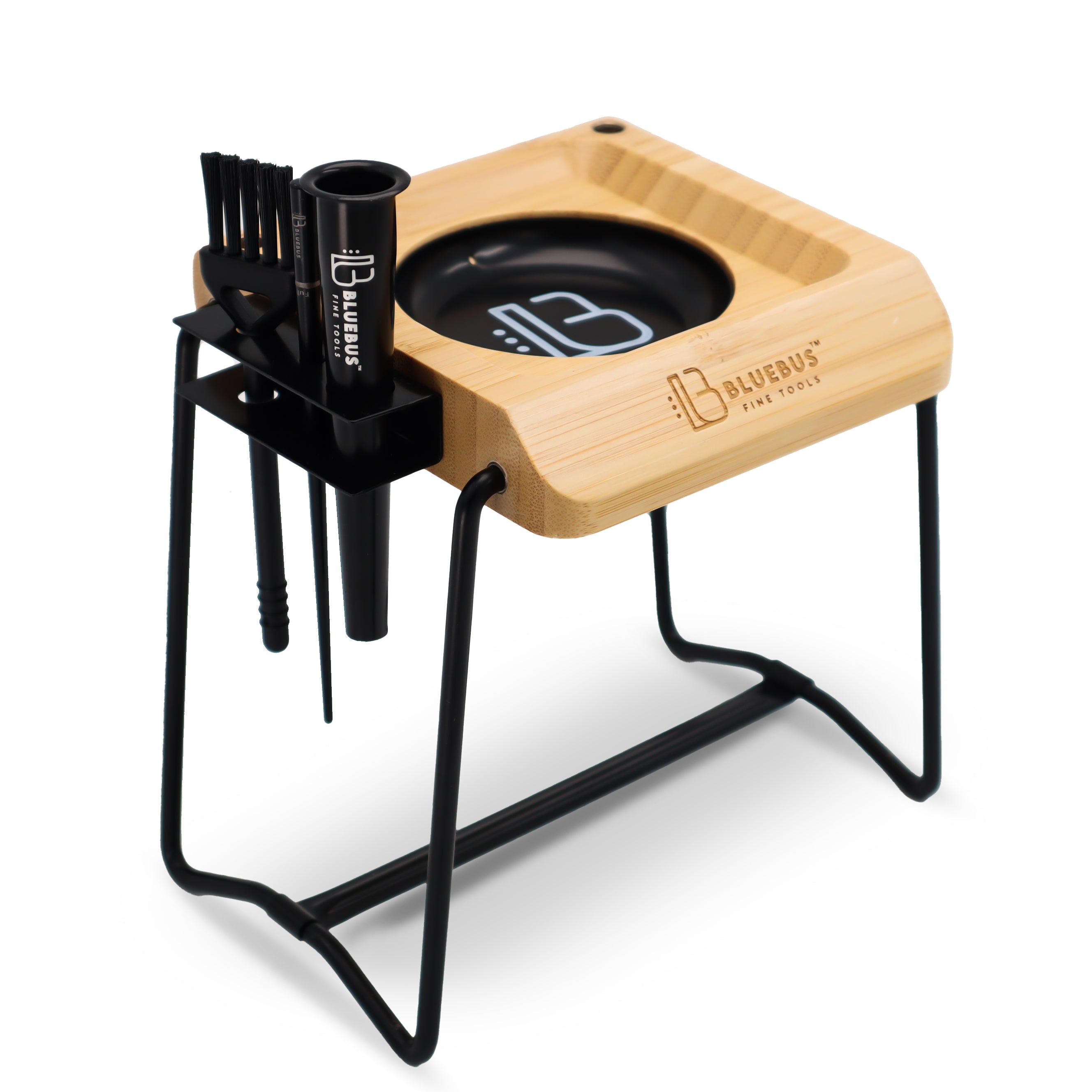
Three airtight glass jars, a tools stand and storage unit, metal cones in king size and 1¼ with cone funnels, a metal packing stick, metal scissors, a metal plate, an ashtray, a herb grinder brush and a cleaning brush, two smell-proof bags, ten metal stickers and silicone strips — plus the sliding rolling tray and the magnetic lid board.
The lock has a built-in backup access method, so you can still open the box. Registered fingerprints are held in memory that doesn't depend on power, so nothing is lost — charge it over USB-C and every print is still there.
Both versions are child-resistant, though neither is childproof — that's a stronger claim than anyone in this category can certify. A locked box reliably settles curious children and houseguests; it will not stop a determined teenager with time alone in the house.
Wipe with a slightly damp cloth and dry it straight away. Never soak it or put any part of it in a dishwasher — bamboo is moisture-sensitive. A little food-safe mineral oil once or twice a year keeps the grain from drying out.

