Dive into the BlueBus world! Explore the latest product reviews, peek inside exciting unboxings, discover lifestyle inspiration, and stay on top of new events – all in one place.
Bamboo vs. Plastic: Why Your Storage Material Actually Matters
By BlueBus Fine Tools
Materials & Buying Guide
Bamboo vs. Plastic: Why Your Material Matters
The price difference between a plastic pop-top and a bamboo box is obvious. The reason for it is less so — and in a category where smell, durability, and discretion are the entire point, the cheaper option ends up costing you more.
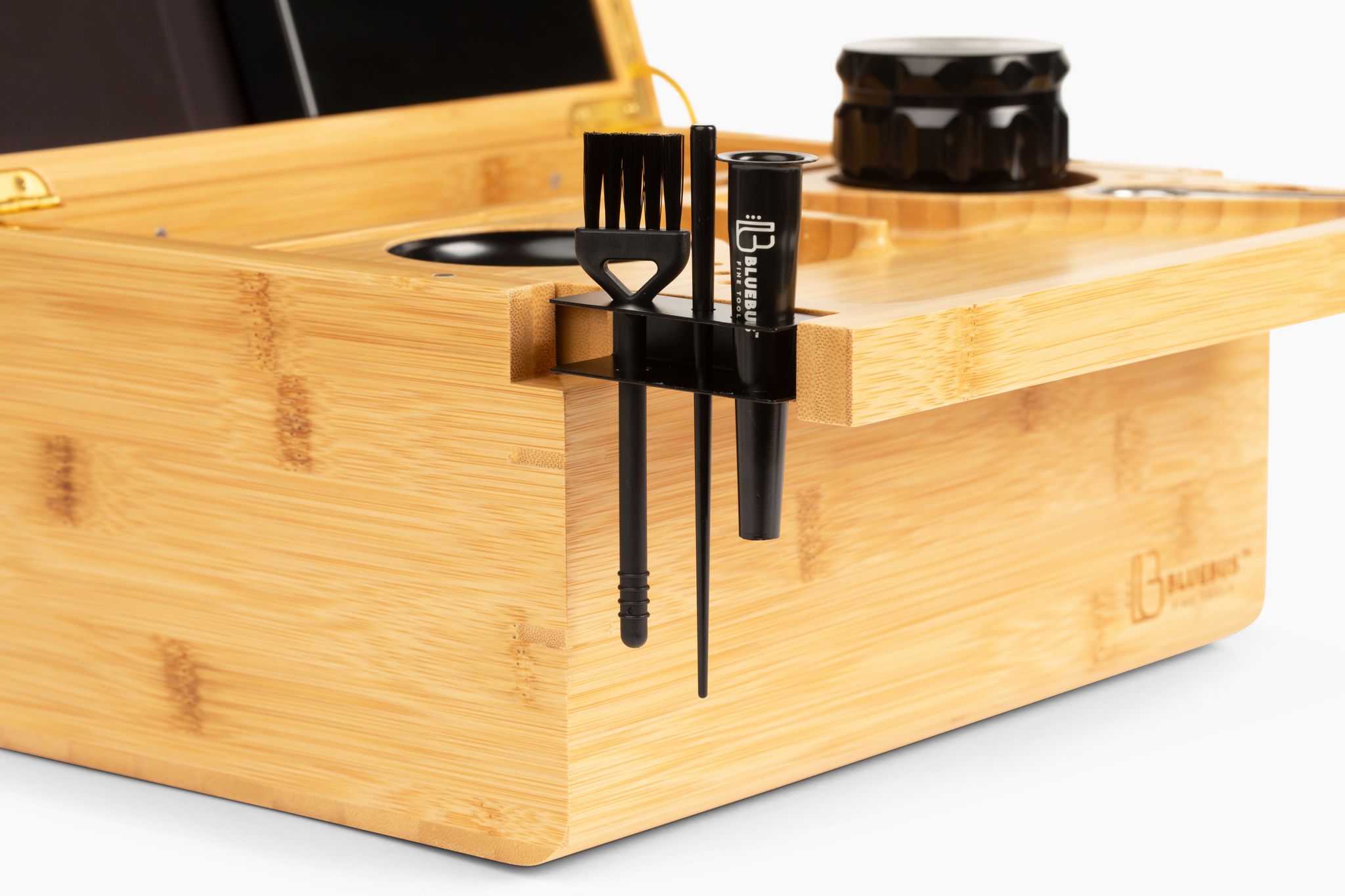
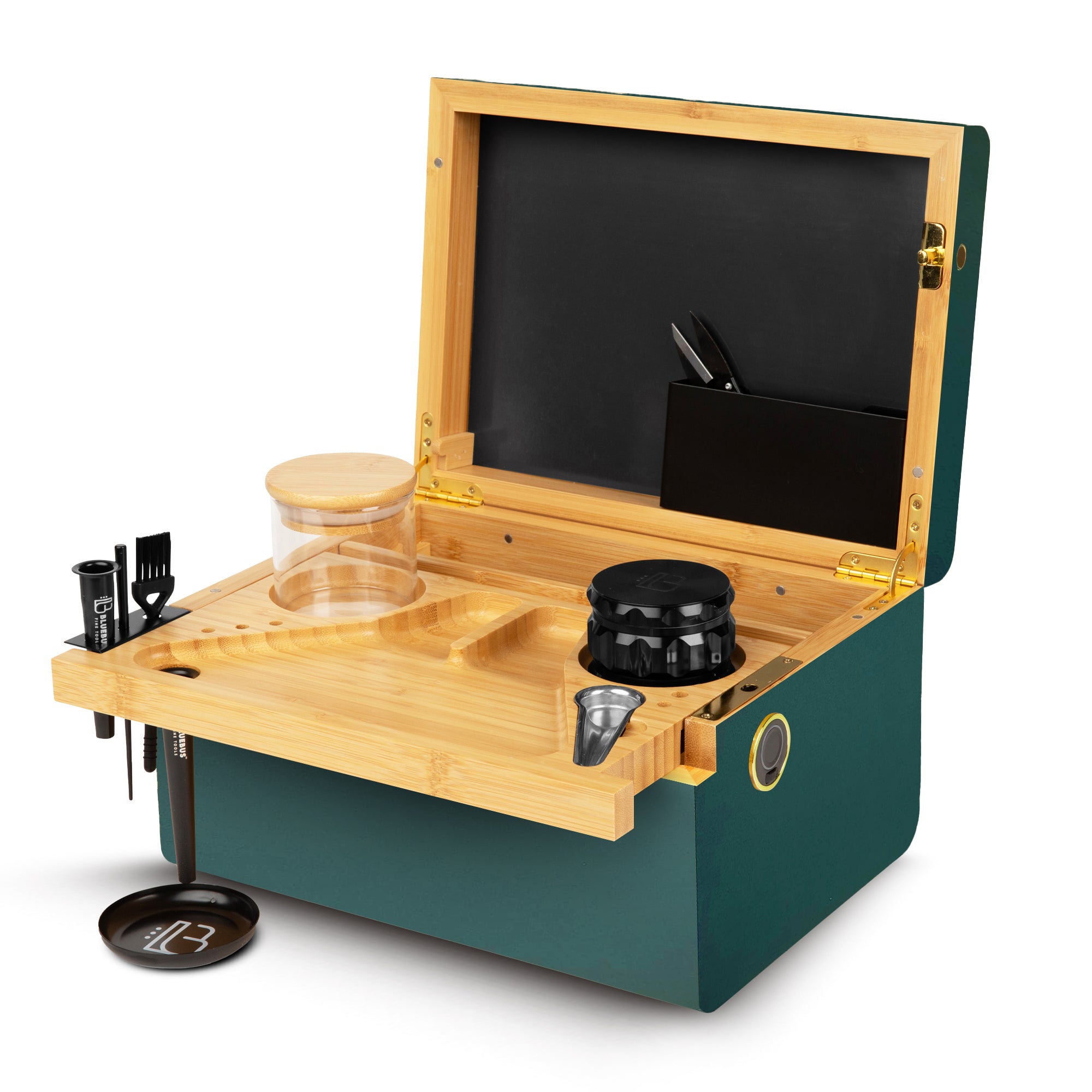
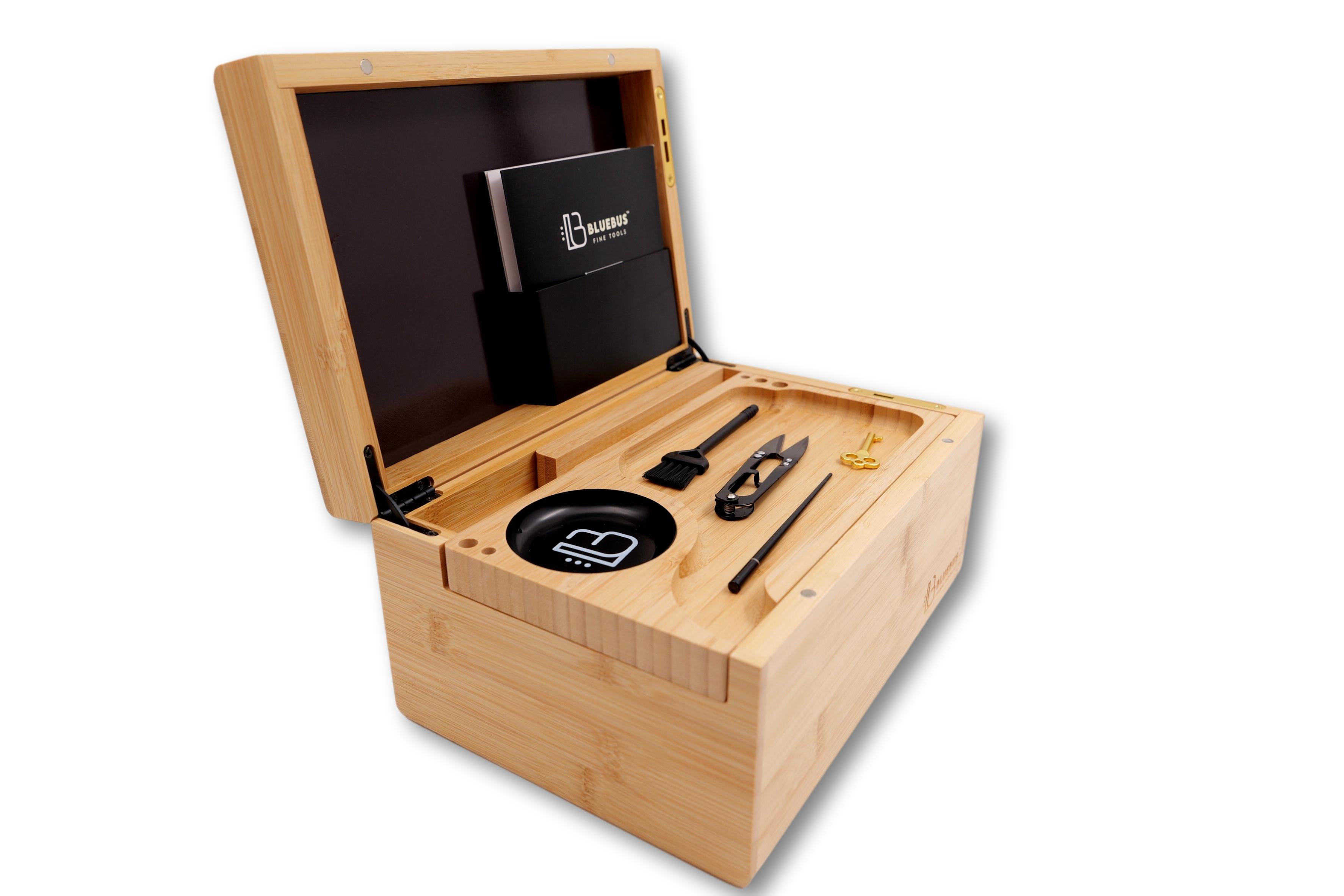
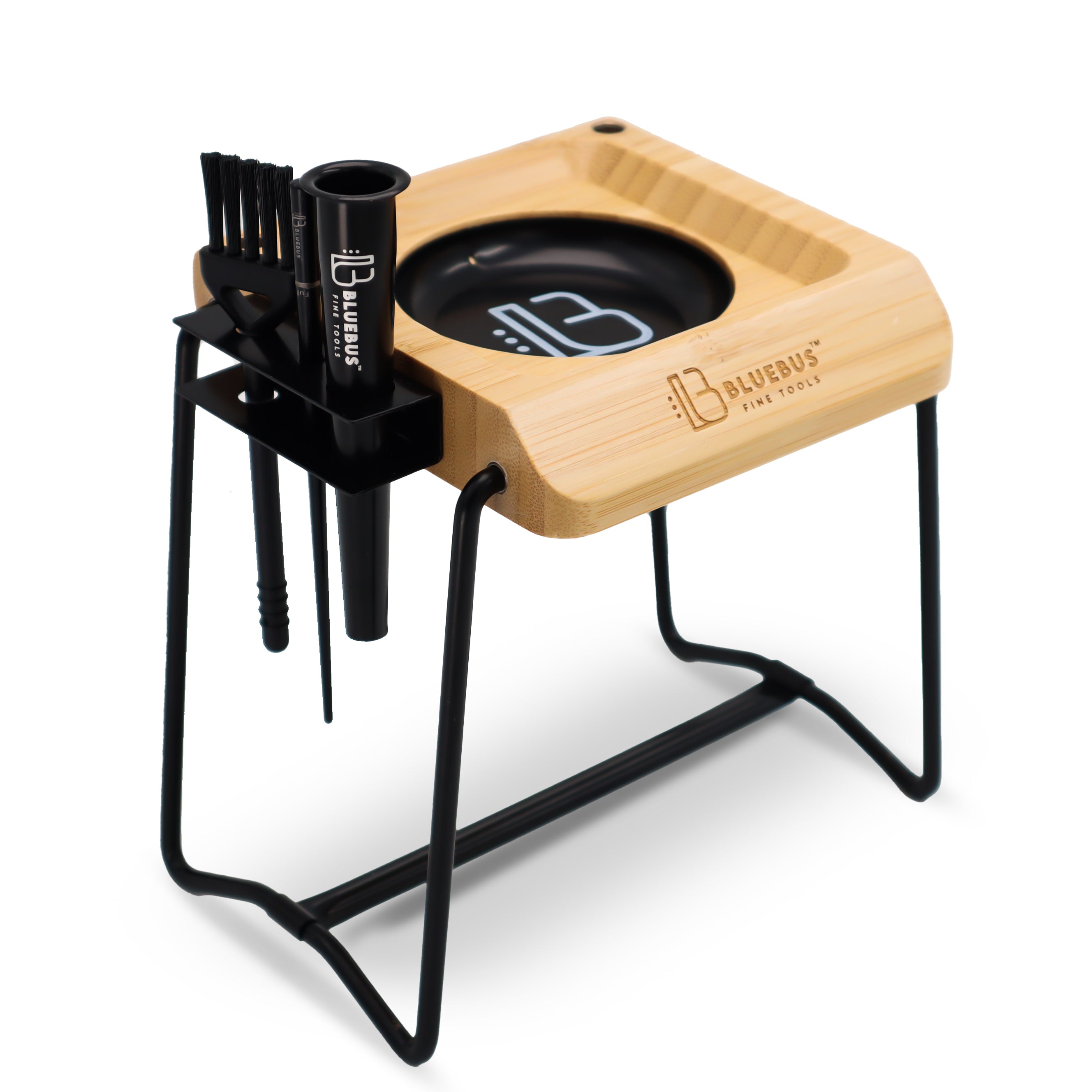
Premium Moso bamboo — the material that gets better with age.
If you've been in the market for a stash box for more than five minutes, you've noticed the split. On one side: plastic containers, smell-proof bags, drugstore-grade pop-tops. On the other: bamboo and hardwood boxes that cost more and look like they belong somewhere you'd actually want to keep them.
Here's what's actually going on with the materials — and why the material you store in matters more than most people think.
01The plastic problem
Plastic does one thing well: it's cheap. Everything else about it is a series of trade-offs you don't notice on day one.
Smell. Most plastic is porous at a microscopic level. The volatile compounds responsible for the smell of fresh flower diffuse into the plastic over time — so a six-month-old plastic container always smells like its contents, even when empty. Washing doesn't fix it.
Warping. Plastic deforms with temperature swings. In a car, a sunny window, or a warm drawer, the lid eventually stops sealing the way it did out of the box — and once the seal goes, the smell escapes.
Microplastics. Plastic continuously sheds particles as it ages. The amounts are tiny, but they're real, and they go where the contents go.
Environmental cost. Plastic takes 400+ years to decompose. The piece you bought to “be discreet” outlives you, your kids, and everyone who'll ever know what was in it.
02Why bamboo wins
Bamboo isn't a hardwood. It's a fast-growing grass that just happens to be stronger than oak when properly cured. That distinction matters for three reasons.
It grows back in 3–5 years. Hardwoods like oak or walnut take 20 to 50 years to reach harvest size. Bamboo regenerates from the root and can be harvested again within half a decade — vastly more usable material, with vastly less impact.
It's naturally antimicrobial. Bamboo produces a compound called “bamboo kun” that resists bacterial and fungal growth. It's why bamboo cutting boards are recommended for kitchens — and why a bamboo box doesn't develop the funk that plastic ones do.
It's denser than it looks. Properly cured bamboo has a Janka hardness rating higher than red oak. It doesn't warp, it doesn't dent easily, and it ages without losing integrity. A bamboo box looks better in five years than on day one — the patina deepens, the grain settles in.
Plastic feels hollow. Cheap bamboo feels light.A real bamboo box has presence.
03How BlueBus sources its bamboo
Not all bamboo is the same. The cheap stuff — what you see on bargain marketplaces — is fast-cured, glued with formaldehyde-based adhesives, and finished with synthetic lacquer. It looks like bamboo, but it's closer to MDF wearing a costume.
Every BlueBus box uses Moso bamboo, slow-cured for density, joined with low-VOC adhesives, and finished with food-safe natural oil. We source from managed groves rather than wild stands — so the harvest cycle stays sustainable and the supply chain stays traceable. You can read more about our patented designs and the materials we use on our patent page.
04How to care for a bamboo box
Bamboo is forgiving, but a few small habits keep it looking new:
Wipe with a slightly damp cloth. No soaking, no soap-and-water flooding. Bamboo handles moisture but doesn't love being submerged.
Keep it out of direct sun for hours at a time. Like any natural material, prolonged UV lightens the finish. A nightstand or shelf is ideal.
Oil it once a year (optional). A drop of food-safe mineral oil rubbed in with a soft cloth restores the depth of the grain.
Don't store anything wet inside. Dry your flower first — bamboo's antimicrobial properties handle a lot, but they're not magic.
05The takeaway
If your stash box is a thing you stick in a drawer and forget about, plastic technically does the job. But every BlueBus customer we've heard from says the same thing once they switch: they didn't realize how much the material was bothering them until it stopped bothering them.
A box you actually like having around. That doesn't pick up smells. That gets better with age. That doesn't outlive you in a landfill. That's the difference bamboo makes.