



MULTIBOX: A Box That Isn't About Stash
The MULTIBOX is a bamboo organizer with a fingerprint lock, built on the Golden Ratio. Here's what it holds, who it's for, and why it isn't hidden away.


Dive into the BlueBus world! Explore the latest product reviews, peek inside exciting unboxings, discover lifestyle inspiration, and stay on top of new events – all in one place.


Today is World Bamboo Day.
It was established on 18 September 2009, at the 8th World Bamboo Congress in Bangkok, by the World Bamboo Organization — a body that started life in 1992 as the International Bamboo Association. The point of the day is straightforward: bamboo does a remarkable amount of work for the planet, and almost nobody outside the industry knows the details.
We have a particular interest here, because bamboo is the material our boxes and trays are built from. So this seems like the right day to explain why — and to be honest about which of the claims you'll read today actually hold up.
This is the detail everything else follows from. Bamboo is a grass. It's more closely related to wheat and sugarcane than to oak or walnut.
That matters because of how grasses grow. Most timber trees grow by adding girth, slowly, from a trunk that has to be felled and replanted to harvest. A bamboo plant grows vertical stems — culms — from an underground root network called a rhizome. Cut a culm and the rhizome is untouched. It simply sends up another.
So harvesting bamboo isn't felling. It's closer to mowing.
Bamboo attracts inflated claims, and this is a day when a lot of them get repeated. Here's what stands up.
It grows extraordinarily fast
Under the right conditions, certain species have been recorded growing up to around 91cm — roughly three feet — in a single day, which makes bamboo the fastest-growing plant on earth. That figure is a record under optimal conditions for particular species, not a typical rate for every bamboo in every field, and anyone quoting it as an average is overselling. But even ordinary growth rates are in a different category from timber.
It matures in years, not decades
A bamboo culm is ready to harvest in roughly five to six years. A hardwood tree takes thirty to forty. That single difference is most of the sustainability argument, because it determines how fast a harvested stand can replace itself.
It doesn't need replanting
Because the rhizome survives harvest, a managed bamboo grove keeps producing indefinitely without replanting, and the soil is never cleared or disturbed the way it is in timber forestry. That means no erosion cycle and no gap where the land sits bare.
It stores carbon, and keeps storing it
Project Drawdown puts bamboo production at roughly 2.03 metric tons of carbon sequestered per hectare per year. Just as importantly, the rhizome network underground continues to hold carbon after the culm above it has been cut — so unlike a felled tree, the carbon storage doesn't stop at harvest.
You'll also see claims that bamboo releases 35% more oxygen than an equivalent stand of trees. We've looked for a solid source for that number and can't find one, so we don't use it. The case for bamboo is strong enough without it.
Sustainability arguments tend to imply a compromise — that you accept a worse object for a better conscience. Bamboo is the rare case where that trade doesn't exist. It's harder than most hardwoods used for boxes, it's dimensionally stable once properly dried and finished, it takes a finish that deepens with age rather than dulling, and it has a warmth that no plastic or coated MDF has ever managed to fake.
If bamboo were environmentally neutral we would probably still use it. That it happens to be one of the most renewable materials available is the part that makes the decision easy.
Our bamboo boxes
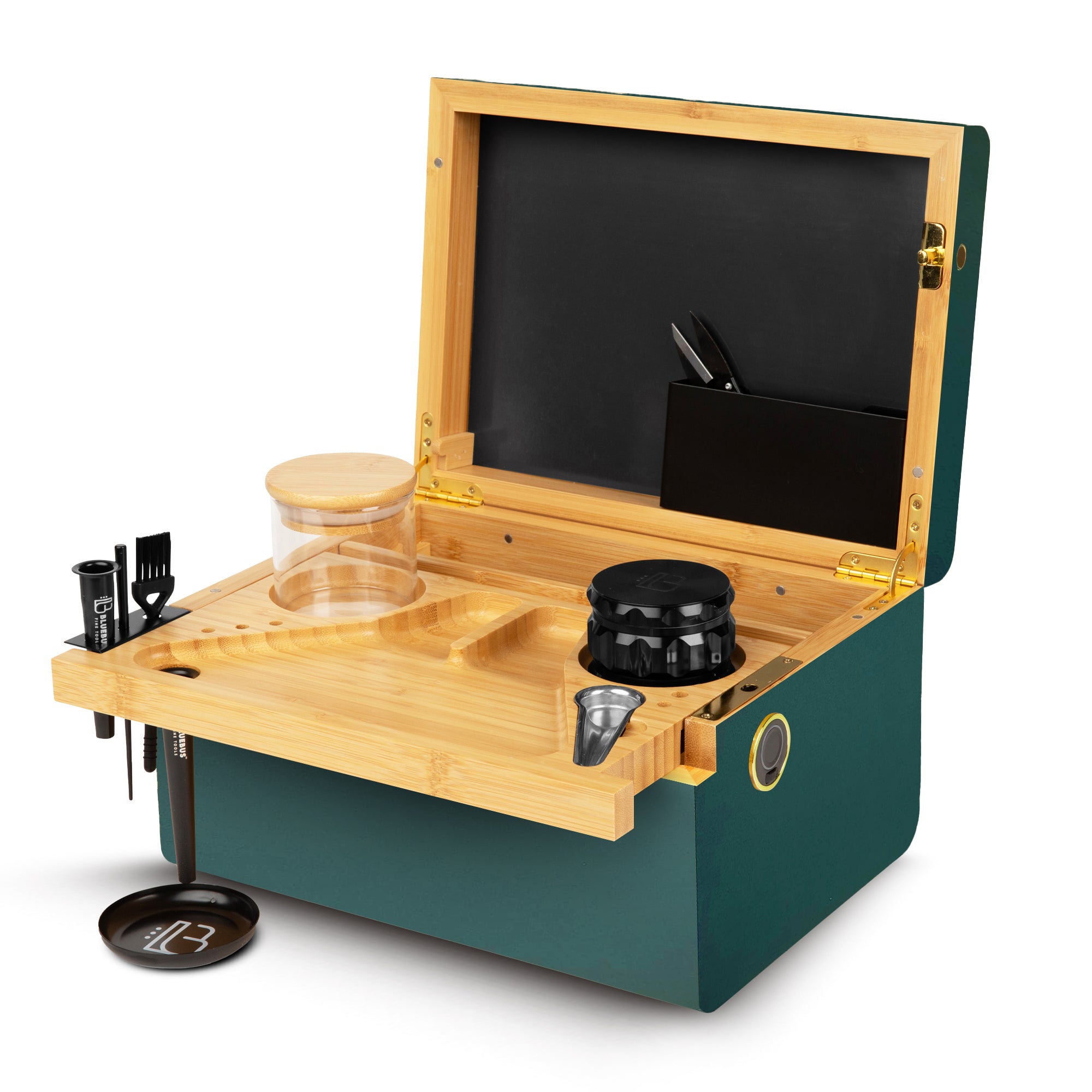
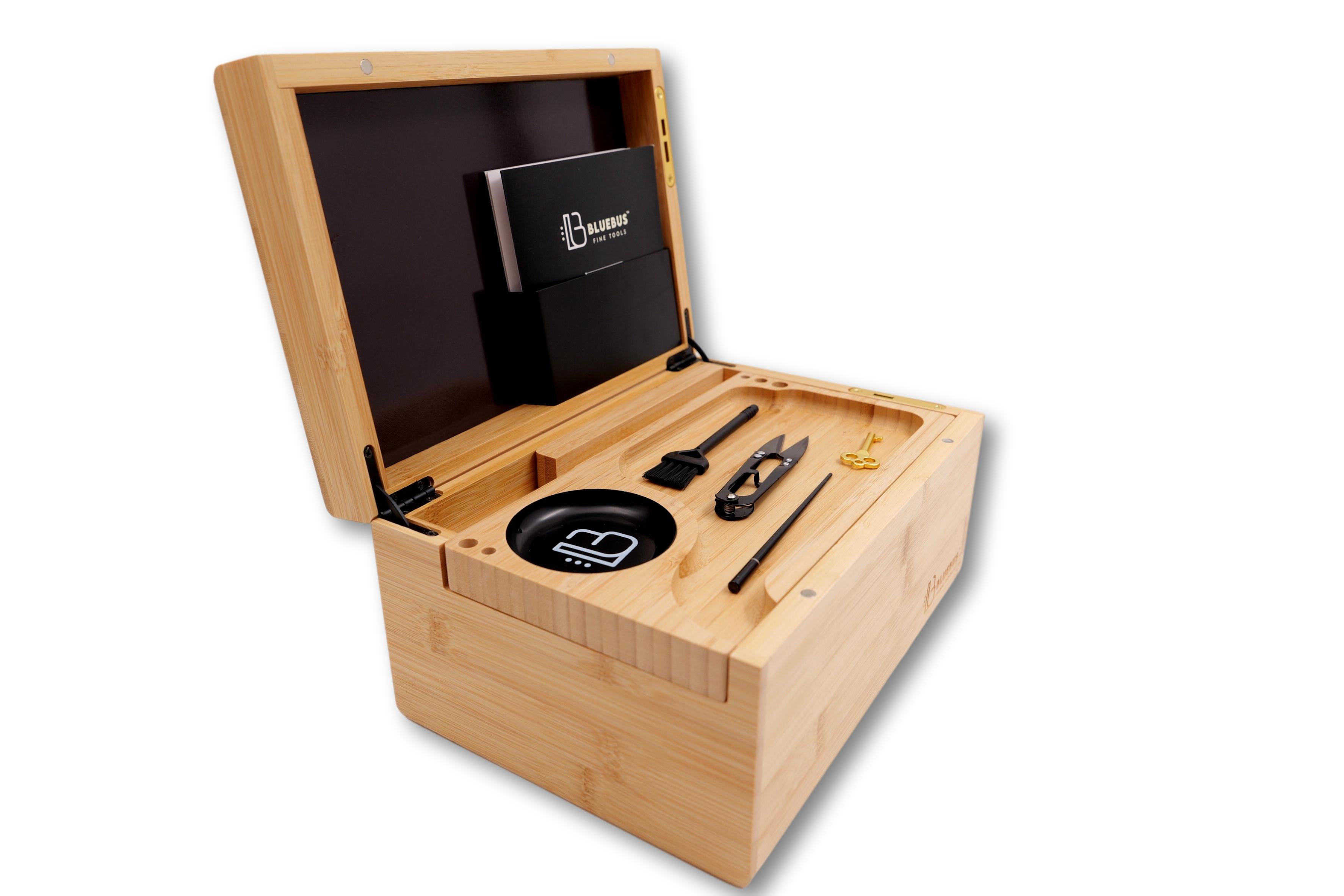
The Discovery 2.0, the Genesis 3.0 and the GOLDEN ROLLER BOX are all built from bamboo — different locks, different layouts, different sizes, same material. These are the products where bamboo does the most visible work: the grain is the object, and it's what people notice first and keep noticing years later.
The BLAZE
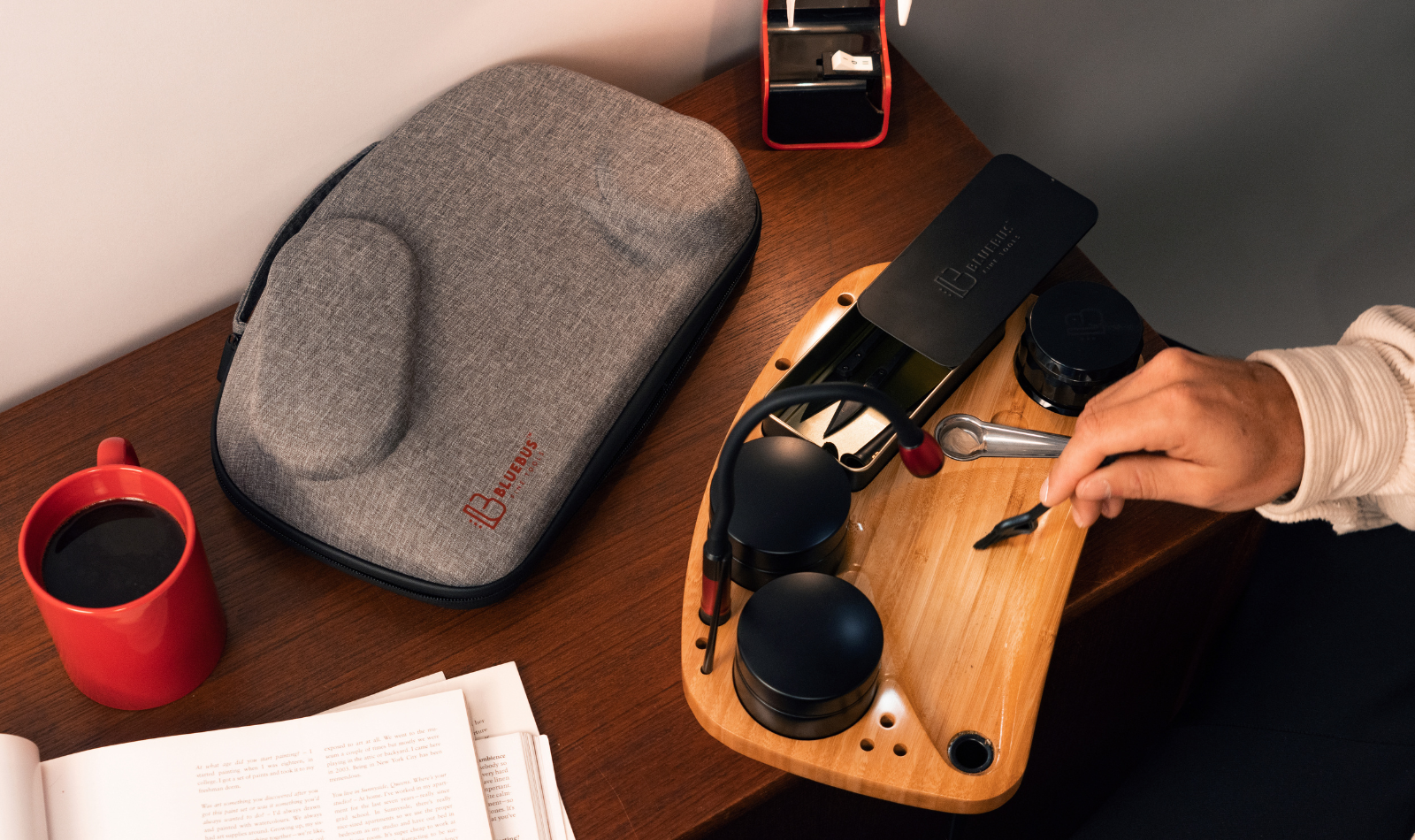
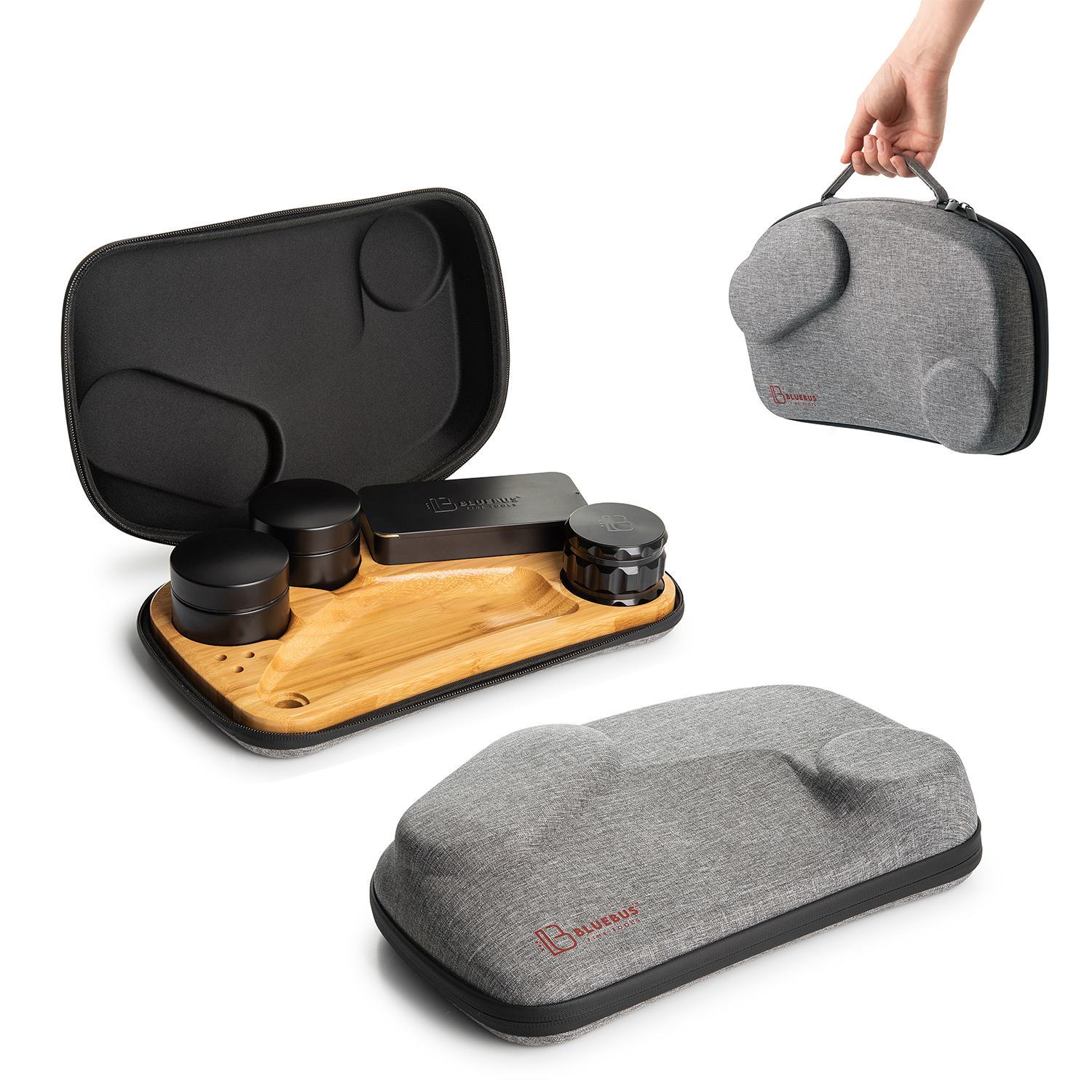
The BLAZE is a bamboo rolling tray with carved compartments, built to travel — it comes with an rPET carrying bag so the whole setup goes with you. Bamboo earns its place here for a practical reason rather than an aesthetic one: it's light enough to carry and hard enough to survive being carried.

The ORION 2.0
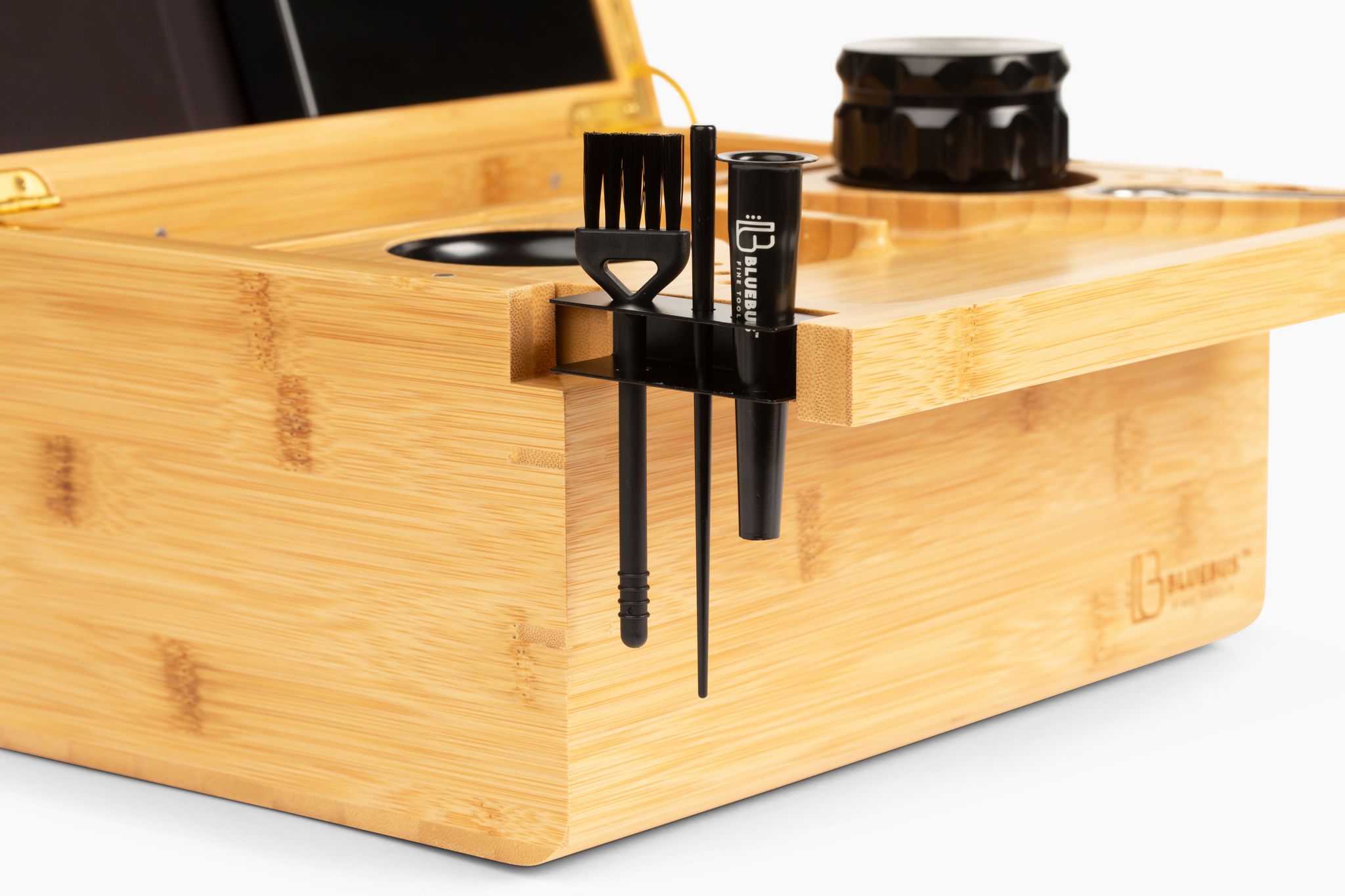
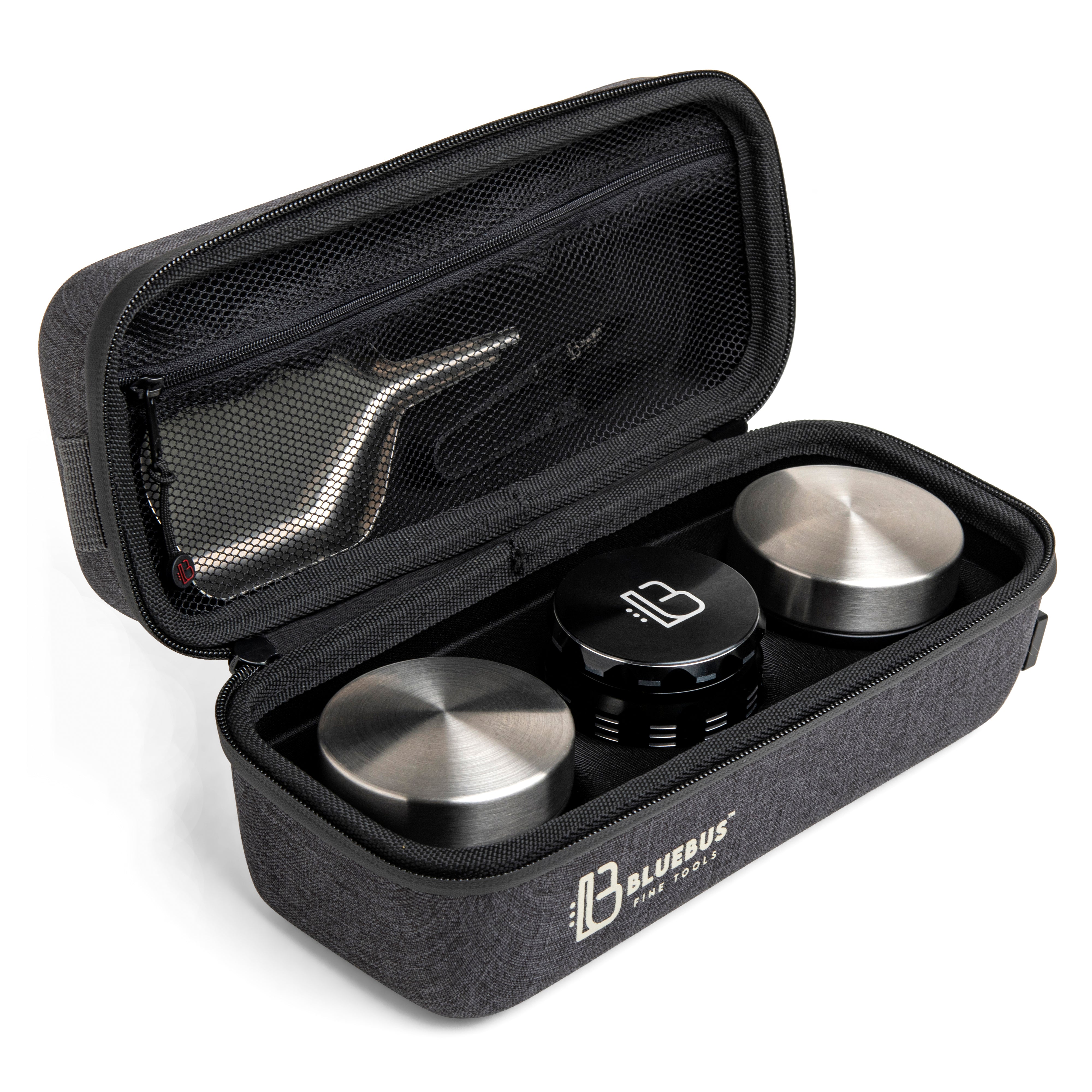
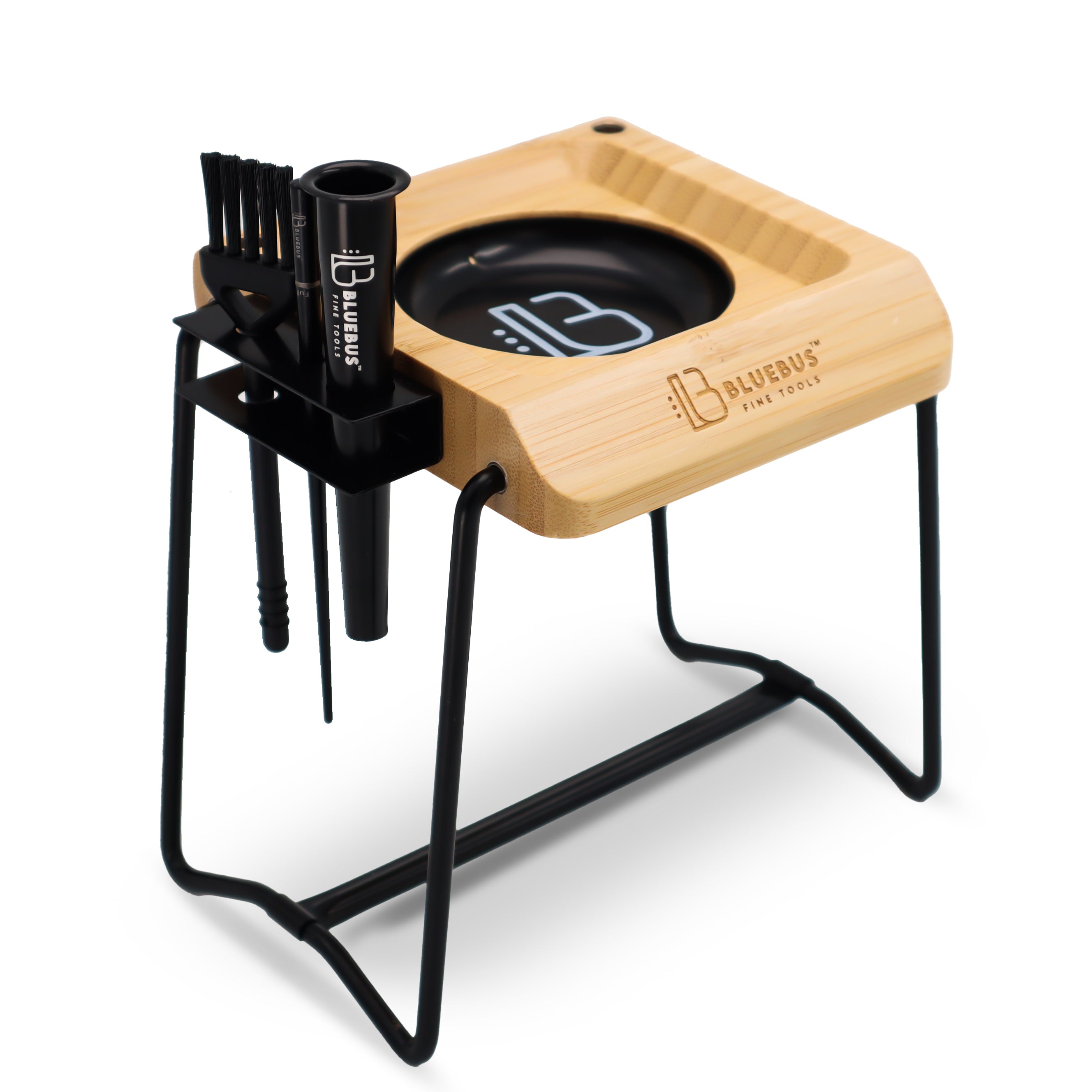
The ORION 2.0 is our premium cone loader, built around a precision-cut bamboo tray with foldable metal legs and a magnetic tool stand. It comes with metal filling cones and funnels in both king size and 1¼, and the bamboo tray is what turns a loading tool into something you'd leave out on a table.

Choosing a renewable material only counts for so much if the object made from it gets thrown away in two years. The most sustainable thing about a bamboo box is that a well-treated one lasts decades.
That takes almost nothing: wipe it with a damp cloth weekly, keep it out of prolonged direct sun, oil it once a year with food-safe mineral oil, and don't let moisture sit inside it. Four habits, a few minutes a year, and the box outlives the trend cycle several times over.
Happy World Bamboo Day.

